

Nipah virus is one of the most dangerous zoonotic pathogens with a fatality rate of up to 75%. WHO has included it on the list of priority threats to global health. But how real is the risk of a new pandemic? Let's examine the facts.
In Brief
- Fatality rate: 40–75%
- Vaccine: does not exist
- Treatment: symptomatic only
- Human-to-human transmission: possible but limited
- Pandemic risk: low
- Situation in Azerbaijan: no cases registered
What is Nipah Virus
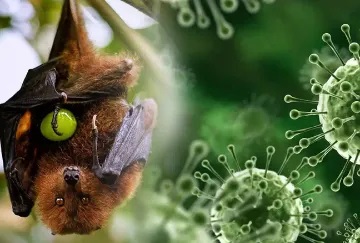
Nipah virus (NiV) is a dangerous zoonotic virus from the Paramyxoviridae family that is transmitted to humans from animals. The main natural reservoir is fruit bats of the genus Pteropus (flying foxes).
History and Geographic Distribution
Outbreak Timeline
- 1999 — first outbreak in Malaysia among pig farm workers. Over 250 cases and more than 100 deaths were registered.
- 2001–2025 — regular seasonal outbreaks in Bangladesh, occurring almost every year.
- 2018–2023 — periodic outbreaks in India, especially in Kerala state.
Where Cases Are Registered
Countries with confirmed human cases:
- Malaysia — epicenter of the first outbreak (1999)
- Bangladesh — regular outbreaks since 2001
- India — periodic epidemics (Kerala state)
- Singapore — imported cases
- Philippines — sporadic cases
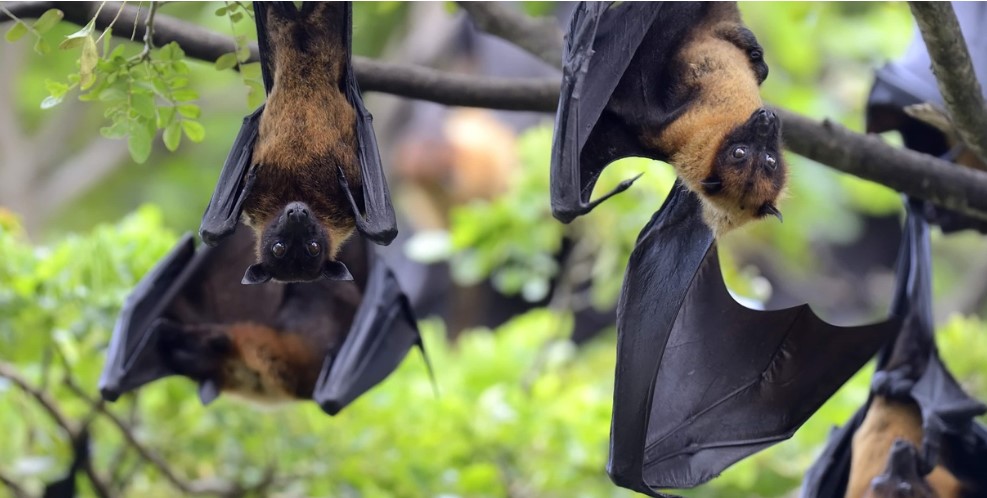
Countries where the virus has been detected only in bats: Thailand, Cambodia, Indonesia, Madagascar
The virus circulates in nature much more widely than human cases are registered.
How the Virus is Transmitted
Nipah virus can be transmitted through three main routes:
From Animals to Humans
Direct contact with infected animals — pigs, bats, or their biological fluids.
Through Contaminated Products
Consumption of products contaminated with bat secretions. The most common examples are date palm sap contaminated with saliva from infected bats, as well as fruits (especially mangoes) that have been bitten or contaminated by these animals.
From Human to Human
Through close contact with an infected person via biological fluids — saliva, sputum, blood.
Symptoms and Disease Progression
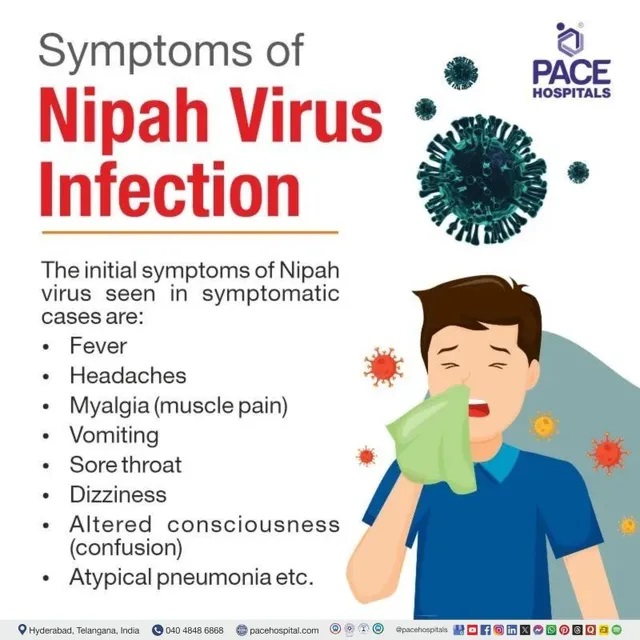
Incubation Period
4 to 14 days from the moment of infection. In rare cases, it can reach 45 days.
Initial Stage (first 3–5 days)
- High fever (38–40°C)
- Severe headache
- Cough and sore throat
- Nausea and vomiting
- Muscle pain
Severe Form (after 5–14 days)
As the disease progresses, the following develop:
- Acute encephalitis (brain inflammation)
- Impaired consciousness, disorientation
- Seizures
- Coma
Fatality Rate
According to WHO and CDC data, the fatality rate ranges from 40% to 75% depending on treatment conditions and the specific outbreak. This is one of the highest rates among known viral infections.
Treatment and Vaccines

What is Available Today
Currently, there is neither specific treatment nor a vaccine for Nipah virus.
Patients receive only supportive therapy:
- Respiratory control (mechanical ventilation if necessary)
- Maintenance of water-electrolyte balance
- Symptomatic treatment of complications
Vaccine Development
Several vaccine candidates are in clinical trial stages, but none have yet been approved for mass use. The timeline for vaccine availability remains uncertain.
Pandemic Risk: Expert Assessment
Why the Virus is Considered Dangerous
The World Health Organization classifies Nipah virus among pathogens with high epidemic potential. Reasons:
- High fatality rate (40–75%)
- Absence of vaccine and specific treatment
- Proven ability to transmit from human to human
- Wide natural reservoir in bat populations
Why a Global Pandemic is Unlikely

Despite the high danger of the virus, there are important limiting factors:
- The virus transmits between humans much worse than COVID-19 or influenza
- Close contact with biological fluids is required for transmission
- No mass airborne transmission is observed
- All registered outbreaks have remained local and controllable
Comparison with Other Viruses
Nipah Virus: Fatality rate 40–75%, low human-to-human transmission, no airborne route
COVID-19: Fatality rate 1–3%, high human-to-human transmission, airborne route
Influenza: Fatality rate 0.1%, very high transmission, airborne route
Expert Conclusion
Nipah virus is capable of causing local epidemics with high casualties, but the risk of a global pandemic is currently considered low due to limited capacity for mass transmission.
Situation in Azerbaijan
According to official data from the Ministry of Health of Azerbaijan, no cases of Nipah virus infection have been registered in the country. The virus is not endemic to the region.
Why the Risk is Low
The main reason is the absence of a natural reservoir for the virus. Pteropus bats, which are the main carriers, do not inhabit the South Caucasus region. Endemic zones are located in South and Southeast Asia.
Precautionary Measures
Despite the low risk, the following measures have been taken:
- Constant sanitary-epidemiological surveillance
- Enhanced control at points of entry into the country
- Readiness of medical facilities to diagnose and isolate suspicious cases
Overall Assessment
What Makes the Virus Dangerous
- Highest fatality rate among known viral infections (40–75%)
- Complete absence of vaccine and specific treatment
- Ability to transmit from human to human
- Presence of a wide natural reservoir
Why a Pandemic is Unlikely
- Poor transmission between humans compared to respiratory viruses
- All outbreaks remain local and controllable
- Absence of airborne transmission route
- Close contact required for infection
For Azerbaijan
- No cases of disease registered
- Natural reservoir of the virus absent in the region (Pteropus bats do not inhabit the South Caucasus)
- Endemic zones are located in South and Southeast Asia
- Healthcare system is prepared to identify suspicious cases
Surveillance Status
Nipah virus is included in the WHO Blueprint for R&D priority pathogens list — a global initiative to prepare for potential epidemics. This means the international community maintains constant surveillance of the virus and is working on developing diagnostic, treatment, and prevention tools.
Conclusion
Nipah virus is not a pandemic. It is a dangerous zoonotic pathogen under WHO surveillance capable of causing local outbreaks with high fatality rates (40–75%).
The risk of a global pandemic is assessed as low due to the virus's limited capacity for mass transmission between humans.
For Azerbaijan, the risk is minimal due to the absence of a natural reservoir and geographic distance from endemic zones.
Sources
World Health Organization (WHO):
- WHO Fact Sheet — Nipah virus
- WHO — Nipah virus infection
- WHO Disease Outbreak News
Centers for Disease Control and Prevention (CDC):
- CDC — About Nipah Virus
- CDC — Clinical Overview
World Organisation for Animal Health (WOAH):