
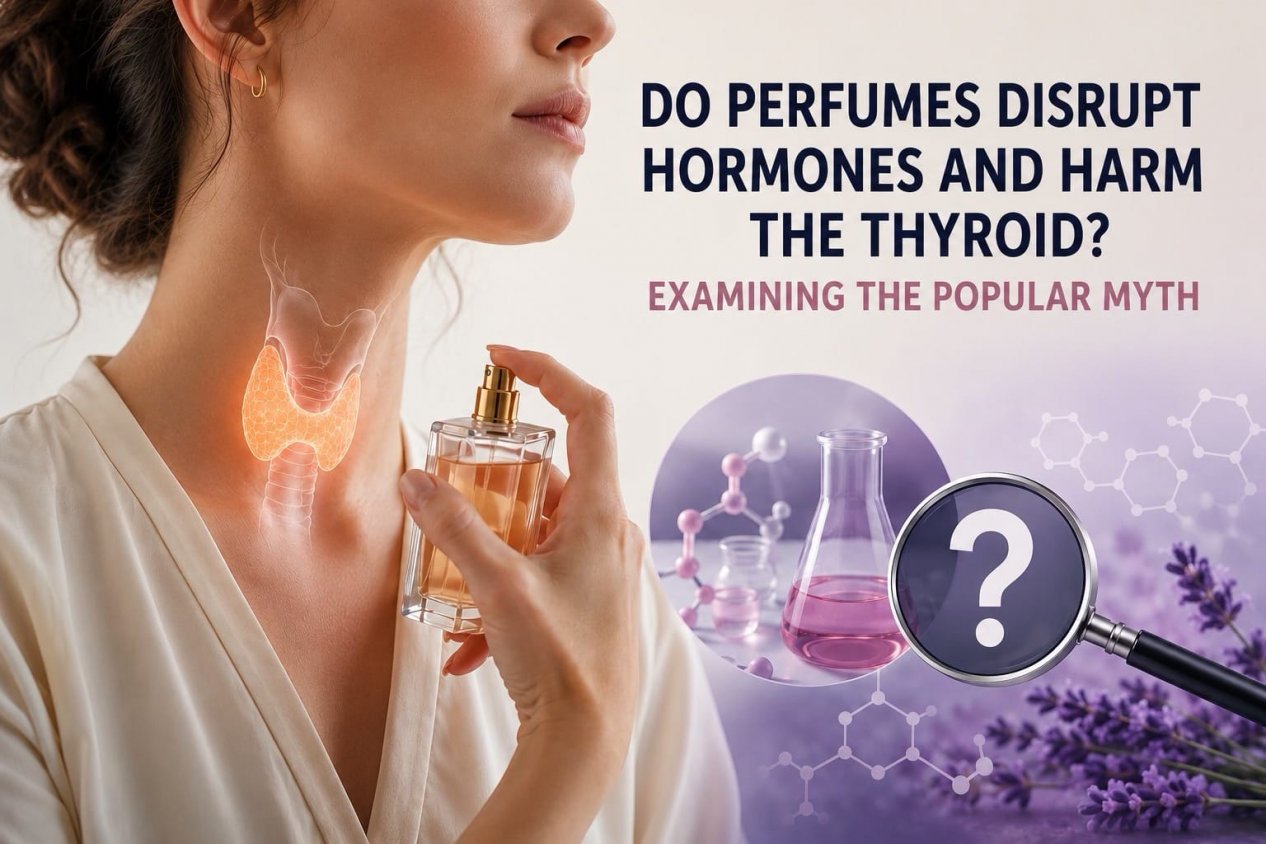
In recent years, claims that perfumes and other fragranced products can disrupt thyroid function have become increasingly common. Some articles and social media posts suggest that wearing perfume may alter hormone levels, interfere with thyroid hormones, or even contribute to thyroid disease. But what does the scientific evidence actually show?
Perfumes are complex mixtures of aromatic compounds, solvents, and various supporting ingredients. Modern fragrances may contain both natural and synthetic substances. Among these are certain chemicals that, in laboratory studies, have demonstrated the ability to interact with the endocrine system.
Particular attention has been given to so-called endocrine disruptors—substances that may influence the body’s hormonal regulation. Certain phthalates, synthetic musks, and other chemical compounds used in cosmetics and personal care products have been investigated for their potential effects on hormone function.
However, it is important to distinguish between laboratory findings and real-world human exposure. Many studies are conducted in animals, cell cultures, or under conditions involving concentrations that are significantly higher than those encountered through normal everyday use of consumer products.
At present, scientific evidence does not support the conclusion that normal perfume use is a proven cause of thyroid disease in healthy individuals. Research into the potential endocrine effects of specific fragrance ingredients is ongoing, but no direct cause-and-effect relationship has been established between perfume use and the development of hypothyroidism, hyperthyroidism, or autoimmune thyroid disorders.
This does not mean that fragrance ingredients are entirely irrelevant. Individuals with fragrance sensitivities, allergies, or certain chronic health conditions may benefit from paying closer attention to the products they choose. In addition, experts generally recommend selecting products from manufacturers that adhere to modern safety standards and quality control practices.
It is also worth noting that thyroid function is influenced by many factors. Genetic predisposition, iodine deficiency or excess, autoimmune processes, certain medications, and overall health status have a far greater impact on thyroid health than the use of perfume.
In summary, the claim that perfumes “damage” the thyroid gland or directly cause thyroid disease is not supported by convincing scientific evidence. At the same time, research into the potential effects of individual chemicals on the endocrine system continues, and the topic remains an area of scientific interest. Based on current knowledge, normal perfume use is generally considered safe for thyroid health in the vast majority of people.