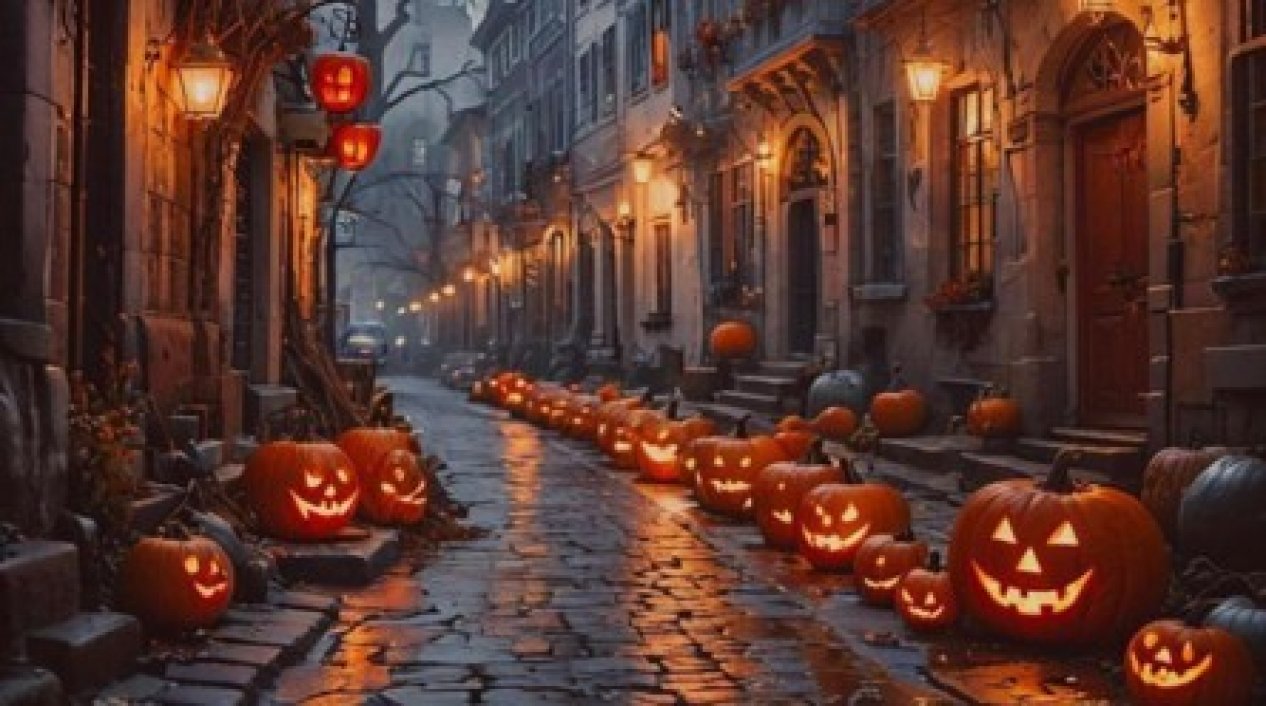
Every year on October 31, millions of people around the world celebrate Halloween. Streets and homes are decorated with carved pumpkins, children and adults dress up as witches, vampires and other mysterious characters, while shops fill with skeletons, ghosts and skulls. For some, it is simply an occasion to have fun; for others, it is a cultural tradition. Yet the holiday remains controversial. Some consider it harmless entertainment, others describe it as a pagan ritual, while some go as far as calling Halloween a festival of Satan.
But what actually lies behind this tradition? Does it have anything to do with the worship of evil forces, or are such claims based on a mixture of history, religious beliefs and modern interpretations?
To understand the origins of Halloween, we need to look back at its history.
From the Ancient Samhain to Modern Halloween
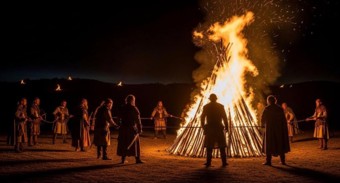
One of the best-known historical predecessors of Halloween is Samhain, an ancient seasonal festival celebrated by Celtic peoples, particularly in Ireland and Scotland. It marked the end of the agricultural season, the conclusion of summer and the beginning of winter. For ancient communities whose lives depended heavily on natural cycles, this transition held particular significance.
Samhain was also associated with beliefs about the supernatural world. According to Irish folklore, the boundary between the world of the living and the world of spirits became less distinct during this period, allowing supernatural beings to appear among people. Researchers associate some customs, including disguises, bonfires and ritual practices, with these beliefs.
However, the popular claim that Samhain was exclusively a festival of the dead or an ancient equivalent of modern Halloween requires caution. Information about its observance comes primarily from medieval sources, while many familiar descriptions of ancient rituals are based on later interpretations. As a result, not every detail of the festival’s origins can be considered historically established.
Christian traditions also played an important role in shaping modern Halloween. The name itself comes from the English expression All Hallows’ Eve, meaning the evening before All Saints’ Day. In Western Christianity, November 1 is dedicated to the remembrance of all saints, while November 2 is observed in the Catholic Church as All Souls’ Day, a day of prayer for the dead.
Over time, folk customs associated with autumn celebrations became intertwined with the Christian calendar. This resulted in a tradition combining religious beliefs, folklore and customs connected with remembering the dead.
During the 19th century, mass emigration from Ireland and Scotland to North America helped spread many of these customs to the United States. It was there that Halloween gradually acquired the familiar form we know today, featuring costume parties, decorated homes, themed entertainment and children going door to door collecting sweets.
Why Is Halloween Associated with Satanism?
The association between Halloween and Satanism is one of the most common arguments made by its critics. However, it is important to distinguish between three concepts: paganism, occultism and Satanism. They are not interchangeable and have different historical and religious meanings.
Ancient Celtic beliefs were connected with natural cycles, seasonal rituals and ideas about the supernatural. However, there is no historical evidence that Samhain was dedicated to Satan or was a festival involving the worship of the devil.
Moreover, the concept of Satan as understood in modern Christian culture belongs to the Abrahamic religious traditions. Therefore, describing an ancient Celtic festival as satanic is historically inaccurate.
Nevertheless, there is a genuine connection between modern Halloween and certain Satanist organisations. For example, the Church of Satan, founded by Anton LaVey in 1966, includes October 31 among the dates it observes. However, the organisation does not claim to have created Halloween or that its historical origins are connected to Satanism. Instead, it interprets an existing cultural tradition through the lens of its own philosophy.
In other words, the participation of a particular religious or ideological group in a celebration does not mean that the tradition itself originated from that belief system. Halloween does not become a satanic festival simply because some Satanists celebrate it.
What Do Halloween’s Main Symbols Mean?
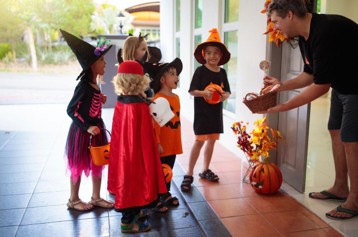
The imagery associated with modern Halloween also has diverse origins. Many familiar symbols developed from European folklore and later became widespread through American popular culture.
One of the holiday’s most recognisable symbols is the carved pumpkin, known as a Jack-o’-lantern. Its origins are linked to an Irish legend about a man named Jack, who, after his death, was denied entry to both heaven and hell. According to the legend, he was condemned to wander in darkness, carrying a glowing ember inside a hollowed-out turnip.
In Ireland and Scotland, turnips and other root vegetables were traditionally used to make such lanterns. When the custom spread to North America, pumpkins gradually replaced them because they were more readily available, larger and easier to carve.
Images of witches, black cats, skeletons and ghosts are rooted in European folklore, historical beliefs about witchcraft and traditional fears surrounding death. Over time, these figures became familiar elements of Halloween aesthetics. However, using such imagery in costumes and decorations does not in itself indicate participation in occult practices.
Another well-known tradition is Trick or Treat, in which children visit neighbouring houses asking for sweets. Its historical background is associated with European customs of requesting food and treats during commemorations of the dead. The modern version became widely popular in the United States during the 20th century.
What Is the Christian View of Halloween?
There is no single position on Halloween shared by all Christian denominations and communities.
In the Catholic tradition, the holiday is connected to the liturgical calendar through All Saints’ Day, and its name derives directly from the Christian expression meaning the eve of All Saints. At the same time, some members of the clergy and religious communities oppose modern Halloween celebrations.
Their objections are primarily related to the popularisation of images of demons, witches, magic and death. Critics argue that turning such imagery into entertainment may conflict with the Christian understanding of the spiritual world and encourage an interest in occult practices.
Other believers distinguish between symbolic imagery and actual religious practices. They argue that children’s costumes, sweets and themed parties have nothing to do with worshipping supernatural forces.
Therefore, it would be inaccurate to claim that all Christians condemn Halloween. Attitudes vary depending on denomination, religious community and personal beliefs.
So, Is Halloween a Festival of Satan?
Historical evidence does not support the claim that Halloween originated as a festival dedicated to the worship of Satan. Its development is linked to several cultural influences: ancient Celtic seasonal traditions, the Christian calendar, European folklore and later American customs.
At the same time, it would be equally inaccurate to deny the pre-Christian elements in the holiday’s history. Some of its traditions are indeed connected with ancient beliefs about spirits, death and the supernatural. In addition, certain modern occult and Satanist organisations may attach their own religious significance to this date.
However, it is essential to distinguish between a holiday’s origins, its modern meaning and the interpretations given to it by particular participants. For most people today, Halloween remains a secular cultural celebration that does not involve religious worship.
Fact-check verdict: The claim that “Halloween is a festival of Satan” is not supported by historical evidence. Describing it as exclusively pagan or exclusively Christian would also be an oversimplification. Modern Halloween is the result of centuries of cultural interaction, with different traditions gradually acquiring new meanings.
In other words, the history of Halloween is far more complex than popular perceptions suggest. Whether or not to celebrate it ultimately remains a matter of personal beliefs, cultural preferences and religious convictions.