
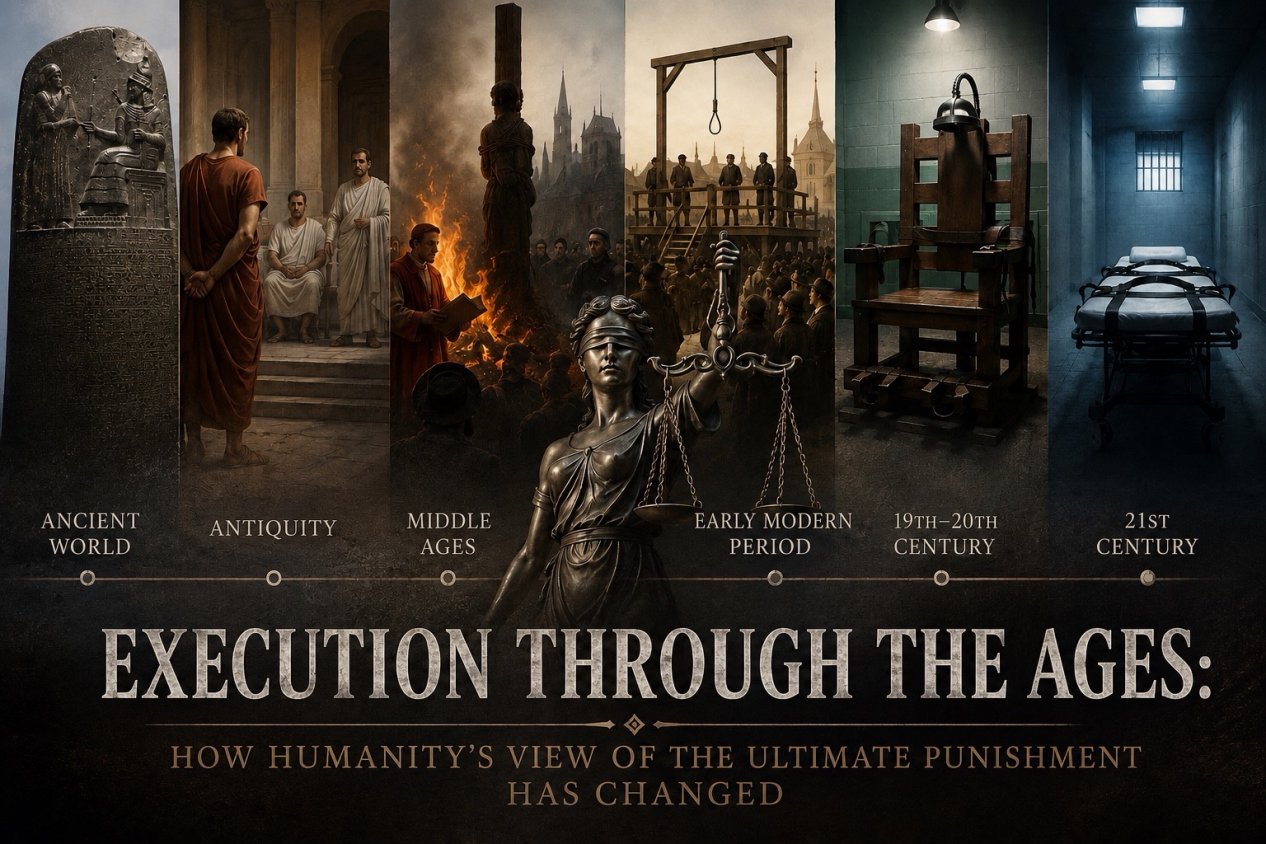
Capital punishment shows up in nearly every legal code we know of, from Hammurabi's laws to twentieth-century criminal codes. Empires rose and fell, religions and philosophies changed, but the death penalty as a legal tool stuck around for millennia. Some societies used it to restore justice; others used it to terrify the population or show off a ruler's power.
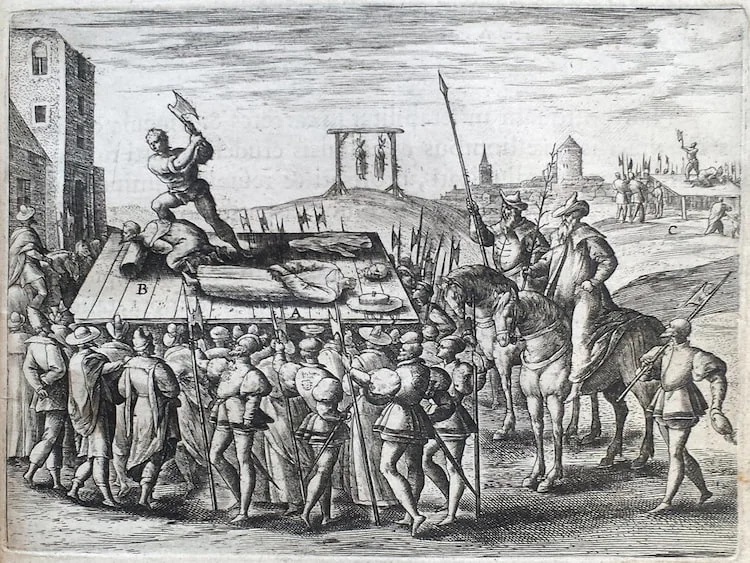
A few centuries ago, an execution was a public event. Crowds gathered in city squares across Europe, merchants opened their stalls, and chroniclers wrote down what happened in detail. It wasn't just a legal procedure – it was proof that the law could reach anyone.
Behind all of this sits the same question people have been asking for thousands of years: does a state have the right to take a person's life? Nobody has settled it. The argument is still going.
The first laws
The death penalty appears alongside the first states. Once people started living in large communities, they needed shared rules – breaking them threatened the community itself, so the worst offenses came to be punished with death.
The oldest surviving law code is Hammurabi's, carved into a basalt stele around 1754 BCE and now kept in the Louvre. It contains 282 provisions, many of which call for execution – and not just for murder. Treason, kidnapping, robbery, certain kinds of fraud, and false accusations that could get someone killed all carried the death penalty too.
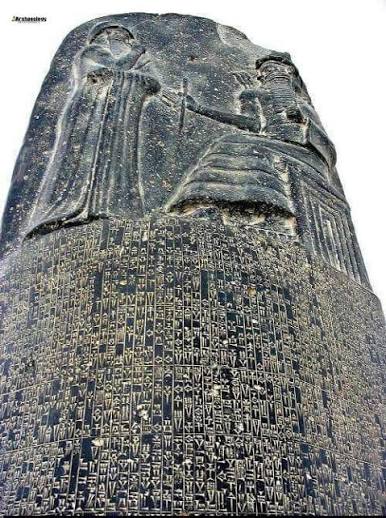
The code's foundation was "an eye for an eye, a tooth for a tooth." It sounds brutal to modern ears, but most legal historians read it differently: the formula limited revenge by banning punishment harsher than the crime itself. Even under Hammurabi, execution wasn't automatic – many cases allowed for fines or property seizures instead, which means that almost four thousand years ago, the law already distinguished between degrees of guilt.
Ancient Egypt
In Egypt, a crime wasn't just a legal violation – it was an attack on maat, the divine order that the pharaoh was supposed to protect. That's why serious crimes counted as a challenge to the whole system of power.
Fewer sources survive from Egyptian criminal law than from Mesopotamian law, but papyri and court records show that execution was used mainly for crimes against the state: conspiracy, treason, murder, and certain religious offenses. Plots against the pharaoh were punished especially harshly, since the ruler himself was considered a living god.
Surviving records describe a fairly developed system of investigation – long proceedings, witness questioning, evidence gathering. That cuts against the common idea that ancient verdicts were always handed down instantly and arbitrarily.
Assyria: rule by fear
Where Egypt worked to preserve order, the Assyrian Empire built its power on shows of force. Assyrian kings left behind many inscriptions boasting of their victories – historians generally treat these as propaganda meant to frighten neighbors and discourage revolt, not as accurate records of everyday practice.
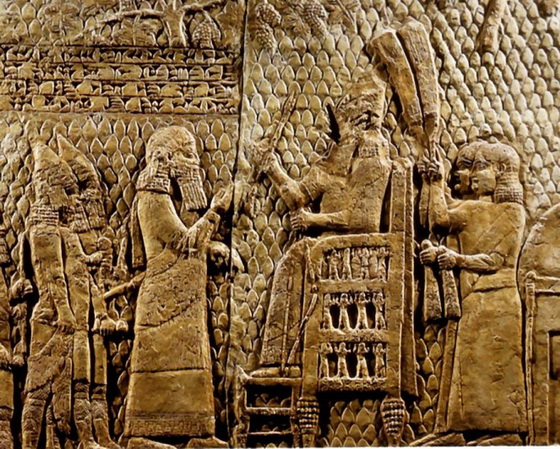
The punishments described for crimes against the state look extreme in these texts, but many researchers think the kings deliberately exaggerated the brutality to shore up their own authority. It's one of the earliest known examples of a state using fear as a political tool.
Ancient China: the law above the individual
Similar ideas were taking shape in China. The Legalist school argued that a strong state was impossible without strict laws and certain punishment. Under the Qin dynasty, these ideas became the basis of government: the law applied equally to everyone, and punishment existed mainly to prevent future crime.
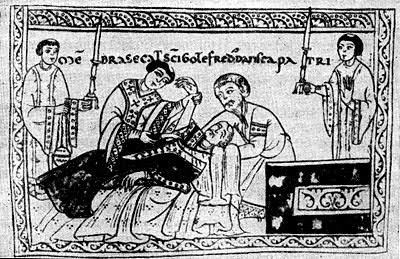
Confucianism later added the idea that a ruler bears moral responsibility to the people, and over time Chinese legal tradition came to combine strict law with moral principles of governance.
Antiquity: law becomes philosophy
The early states of the East were mainly concerned with order. Greece was the first to turn law into a philosophical question: which matters more, the letter of the law or justice itself? The argument still hasn't been resolved, two thousand years later.
Draco and "draconian" measures
In the seventh century BCE, the Athenian Draco wrote the city's first written law code. Before that, verdicts depended largely on oral tradition and the authority of the nobility – a written code was meant to make justice more predictable.
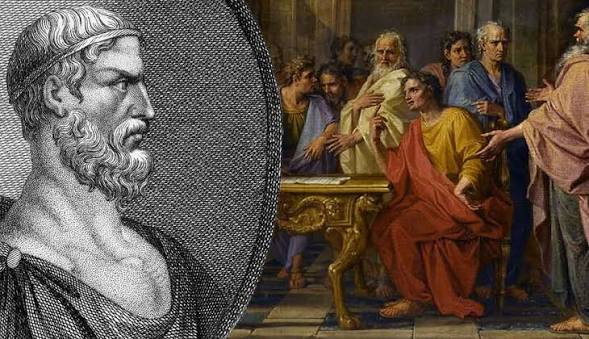
Draco's laws became famous not for their fairness but for their severity: execution applied to a wide range of offenses. Most of them were later softened or repealed by the reformer Solon. But the name stuck – nearly three thousand years later, we still call excessively harsh laws "draconian."
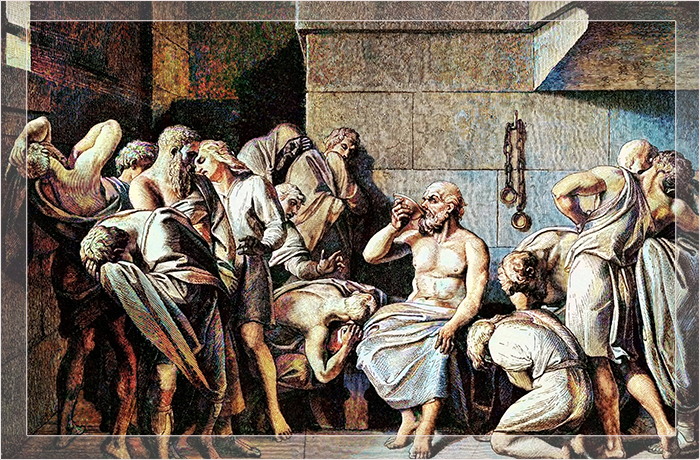
The trial of Socrates
In the spring of 399 BCE, Athens put the philosopher Socrates on trial for impiety and "corrupting the youth." He had a chance to escape into exile but refused. According to his student Plato, Socrates believed that respecting the law was a citizen's duty, even when the verdict itself seemed unjust.
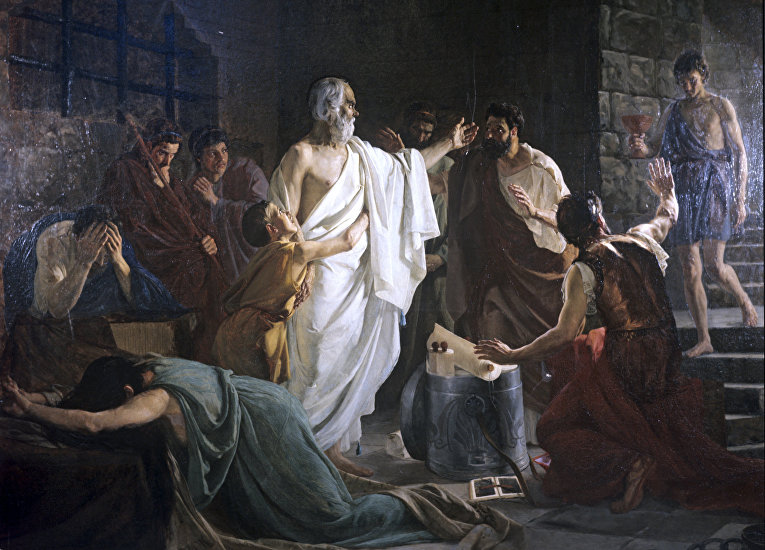
More than two thousand years later, this trial is still cited as a classic example of the conflict between law, public opinion, and freedom of thought – arguably the most famous trial in the history of philosophy.
The ancient world showed something important here: the death penalty isn't only a punishment for crime. It can be a political decision, and a subject of debate that outlives everyone involved in it.
Rome: law as the foundation of the state
If Greece turned law into philosophy, Rome turned it into the basis of the state itself. Roman law shaped most modern legal systems, even though Roman ideas about justice looked very different from ours.
Executions were carried out for treason, murder, war crimes, mutiny, and desertion. Even so, a defendant in the Republic usually had the right to a trial and to present his case – the Roman system was more sophisticated than it's often given credit for. But the law wasn't the same for everyone: a citizen, a slave, a foreigner, and a prisoner of war could face very different punishments for the same act. That looks unjust to us. To the Romans, it was simply how things worked.
Over time, Roman jurists developed increasingly precise principles of investigation and procedure, which is why Rome is often called the cradle of European legal tradition.
The Middle Ages: punishment as a public lesson
After the fall of the Western Roman Empire, law in Europe took on a new character, and execution became not just a judicial measure but a political one.
Sentences were carried out in public, in town squares, in front of everyone from craftsmen to nobles. Historians point to several reasons: to show that punishment was inevitable, to display the state's power, and to convince society that the law applied no matter who stood before it.
Medieval courts, though, weren't nearly as chaotic as they're sometimes made out to be. Many countries had established procedures, kept records, and questioned witnesses. The standard of justice was, of course, far from modern – but the idea that anyone could be executed on a ruler's whim, without trial, oversimplifies how things actually worked.
Church and law
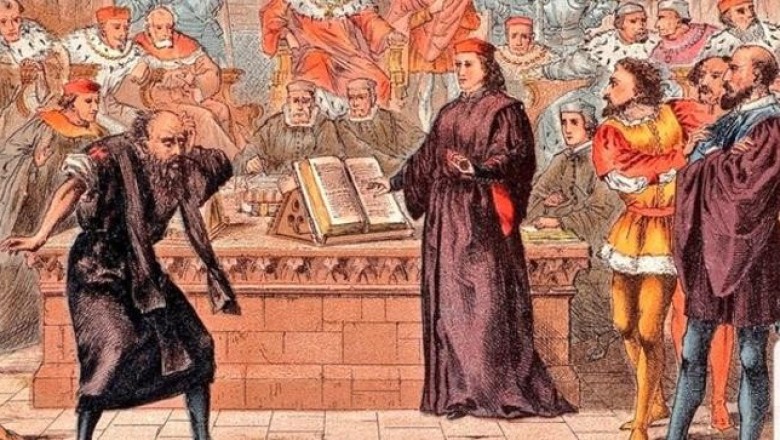
Medieval Europe was a deeply religious society, and law was intertwined with faith. Many crimes counted as both a legal violation and a sin, which is why church officials were often involved in trials. But secular and church courts served different functions and overlapped less than people tend to assume – carrying out a death sentence was, as a rule, left to secular authorities.
The myths around witch hunts
One of the most mythologized chapters of European history is the prosecution of accused witches. Popular culture paints the Middle Ages as an age of nonstop witch burnings, but the research tells a different story.
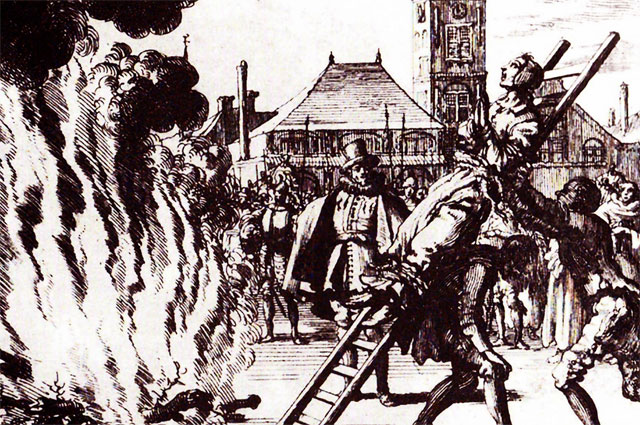
Most witchcraft trials didn't happen in the early Middle Ages at all – they peaked in the fifteenth through seventeenth centuries, well into the early modern period. Most cases went through secular courts, not the Church's inquisition. And the death toll from Europe's witch hunts turned out to be much lower than the figures that circulated for years in popular writing: the most credible estimates put it at roughly 40,000 to 60,000 executions across Europe over several centuries, though historians still debate the exact number.
The Islamic world
While Europe went through the Middle Ages, its own legal traditions were developing across the Middle East. Sharia law drew on the Quran, the Sunna, and the work of Islamic scholars, and different legal schools interpreted the same questions differently – court practice varied a good deal by region and by era.
Execution was reserved for a narrow set of serious crimes, but Islamic law put heavy emphasis on evidence and procedure. In some cases, the victim's family could forgive the offender or accept financial compensation instead – an option that combined punishment with the possibility of reconciliation.
The Enlightenment: the argument begins
By the eighteenth century, Europe was changing fast. Science and the idea of natural rights were spreading, and a question came up more and more often: should the state really answer crime with death?
One of the earliest and most consistent voices against the death penalty was the Italian jurist Cesare Beccaria. In 1764, he published On Crimes and Punishments, one of the most influential legal texts of its time. Beccaria argued that the state's goal shouldn't be revenge but preventing future crime – and that what actually deters people isn't harsh punishment, but certainty that punishment will follow.
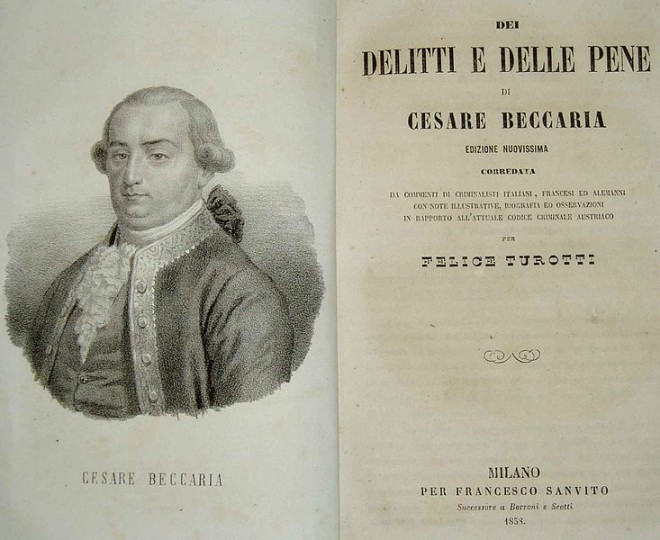
The book was quickly translated into other languages and influenced monarchs and reformers across Europe. In 1786, the Grand Duchy of Tuscany became the first state in the world to formally abolish the death penalty for all crimes. Some countries later reversed course, but that step is generally seen as the start of the global movement to limit capital punishment.
By the end of the century, the argument had stopped being purely legal and turned into a debate about human rights and the limits of state power – ideas that shaped criminal law for the next two centuries.
The 19th and 20th centuries: the search for a "humane" execution
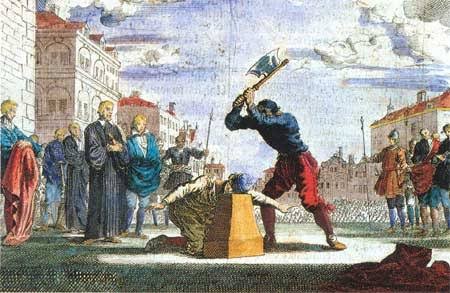
The early nineteenth century changed the whole philosophy of punishment. Public executions increasingly looked less like justice and more like spectacle – one that seemed to harden society rather than reduce crime.
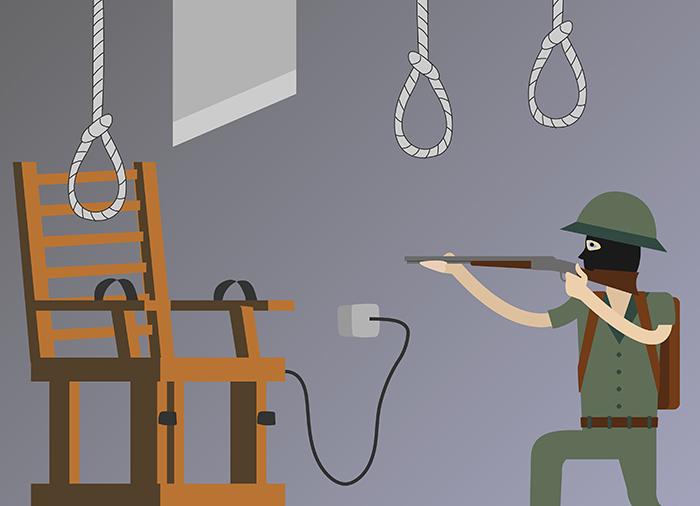
Executions gradually moved behind prison walls, the number of witnesses shrank, and the list of crimes punishable by death got shorter. At the same time, a new idea took hold: the "humane" execution – an attempt to replace older methods with ones thought to cause less suffering and cause death faster.
Doctors, lawyers, and bioethicists today tend to be skeptical of the concept. No method of taking a life makes the death penalty itself reversible, and that means it can never be fully humane, whatever method is used.
After the Second World War
After the war, the world's attitude toward capital punishment started shifting faster. The scale of crimes against humanity pushed many countries to rethink their approach to fundamental human rights.
In 1948, the UN General Assembly adopted the Universal Declaration of Human Rights. It didn't ban the death penalty outright, but it established everyone's right to life and personal security. International treaties limiting capital punishment followed over the next few decades. The European Convention on Human Rights and its protocols gave Council of Europe members the legal basis to abolish the death penalty, first in peacetime and later almost entirely. Abolition gradually became one of the markers of a functioning democracy.
Wrongful convictions
Perhaps the strongest argument against the death penalty is the possibility of executing an innocent person. History has plenty of cases where a convicted person's innocence came to light years later, thanks to new witnesses or a confession from the actual perpetrator.
The turning point came with the rise of DNA analysis in the late twentieth century, which allowed courts to reopen old cases and exonerate people who had been wrongly convicted. For many legal scholars, the irreversibility of execution became the decisive argument: a prison sentence can be reversed. A carried-out death sentence cannot.
The 21st century: two paths
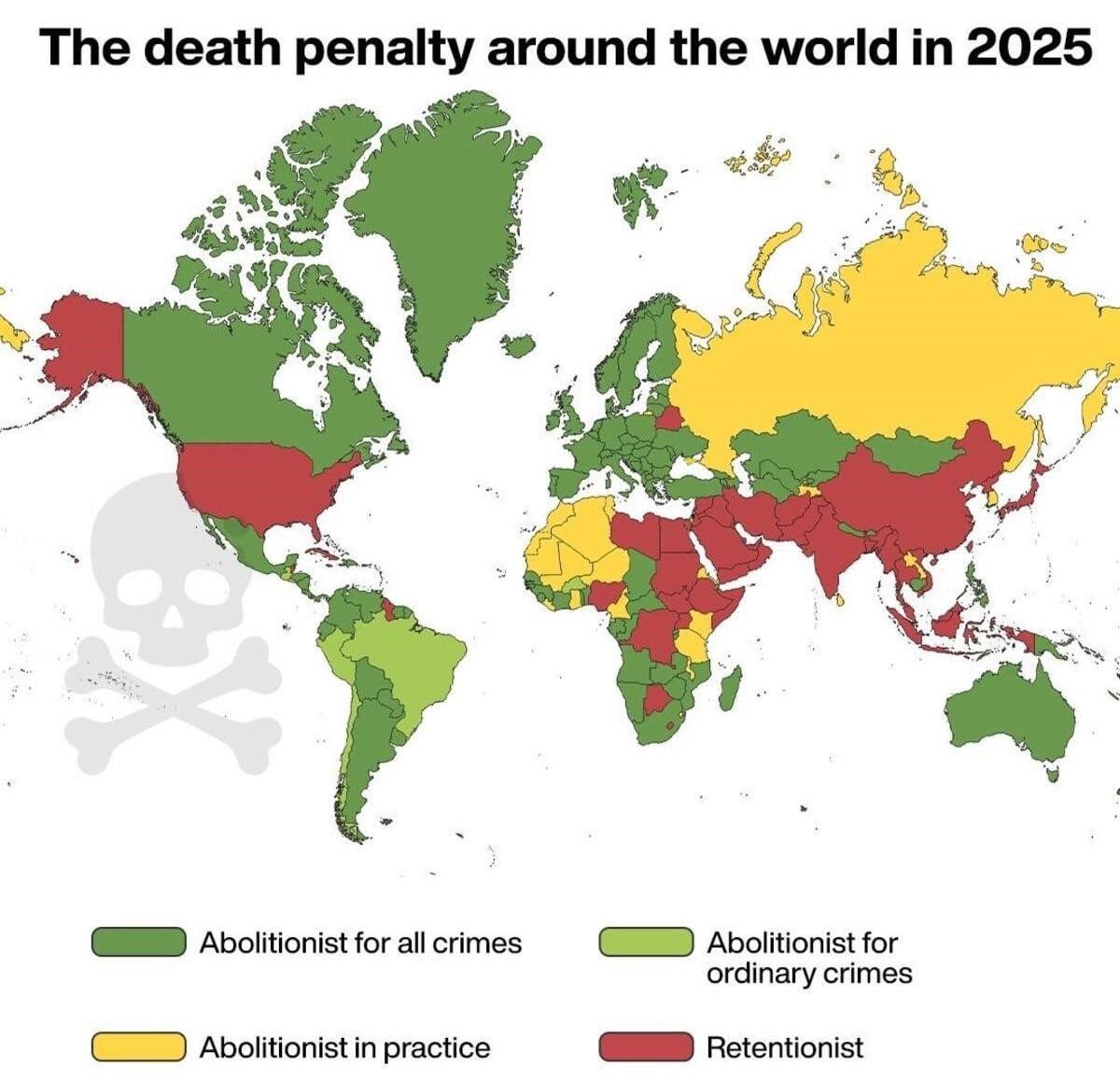
Today, the world's states are split. According to human rights organizations, most countries have either fully abolished the death penalty or haven't used it in years – a trend especially visible in Europe, where abolition is one of the founding principles of the Council of Europe.
Other states still keep it on the books and carry out sentences, typically for aggravated murder, terrorism, treason, or certain drug-related offenses.
Nobody knows the exact number of death sentences carried out worldwide each year. Some countries publish statistics; others treat the numbers as state secrets. That's why international organizations work with cautious estimates based on confirmed data.
A few facts
- Tuscany was the first place in the world to abolish the death penalty, in 1786. November 30, the anniversary of that decision, is now marked as Cities for Life Day.
- "Draconian" isn't just a figure of speech – it comes from a real person, the Athenian lawgiver Draco.
- Not every sentence was carried out. The power of pardon let a monarch commute a death sentence to exile, hard labor, or life imprisonment.
- Public executions disappeared fairly recently. Most European countries kept them until the nineteenth century, and some held on to the practice into the early twentieth.
Sorting out the myths
Only murder was punishable by death. Not true. The list of capital crimes shifted over time and included treason, war crimes, kidnapping, and other offenses – the exact list depended on each country's laws.
Every ancient state was equally brutal. Also not true. Even neighboring states differed significantly in their criminal law and how they applied it.
The modern world has abandoned the death penalty entirely. Most countries have abolished it or stopped using it, but not all – a number of states still have it on the books.
Timeline
- c. 1754 BCE – Hammurabi's Code
- 7th century BCE – Draco's laws in Athens
- 399 BCE – the trial of Socrates
- 1764 – Beccaria publishes On Crimes and Punishments
- 1786 – Tuscany becomes the first state in the world to abolish the death penalty
- 19th century – most European countries abandon public executions
- 1948 – the Universal Declaration of Human Rights
- 1983 – Protocol No. 6 to the European Convention on Human Rights
- 21st century – most countries have abolished capital punishment or effectively stopped using it
In place of a conclusion
The history of the death penalty is, at bottom, the history of how ideas about power and justice have changed – from the notion that a state must show its strength at any cost, to the principle that individual rights and legal safeguards matter more than exemplary punishment.
The argument isn't over. Some people still see execution as a necessary response to the worst crimes. Others believe no state should have the power to take a life at all. But the trend of the last two centuries is clear enough: more and more countries are limiting the death penalty, or getting rid of it altogether.