
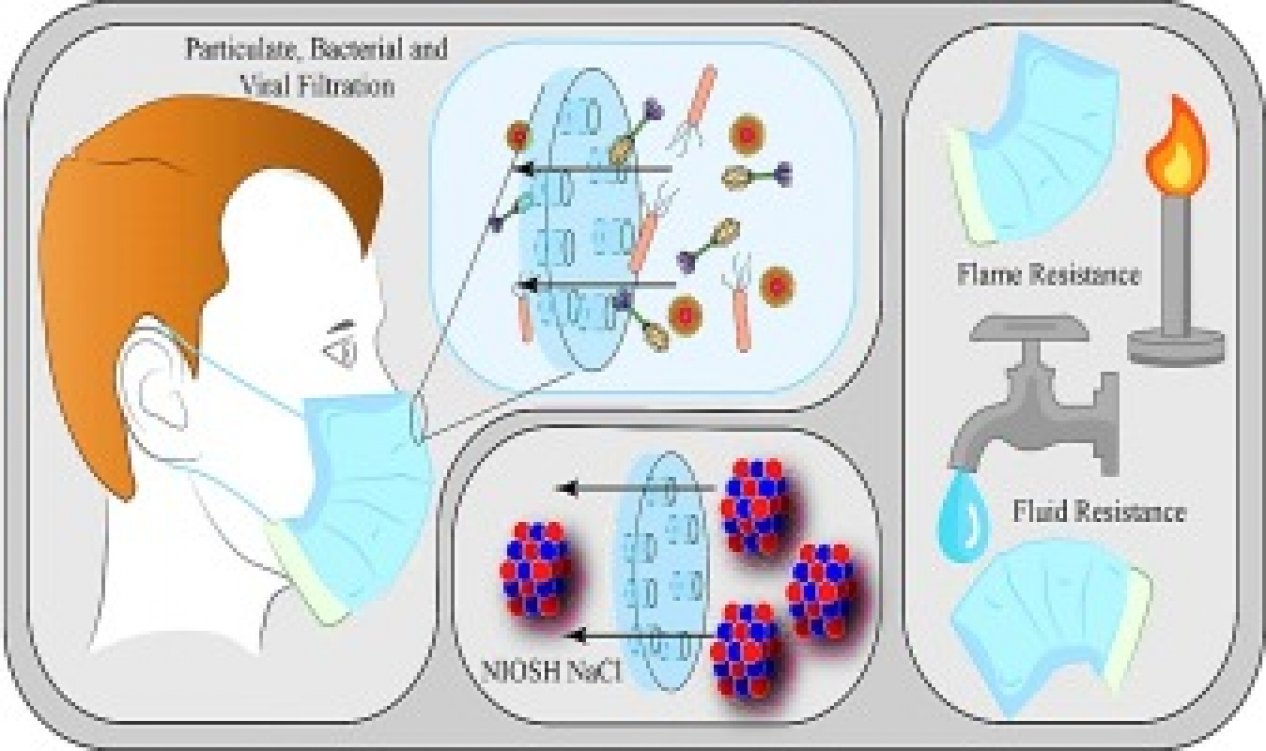
Face masks can help to reduce transmission of respiratory viruses such as influenza, according to experts and medical evidence, but their effectiveness depends on the type of mask used.
Social media posts saying face masks don’t work resurfaced a day after NHS boss Daniel Elkeles, talking amid England’s surge of flu cases, said some people should cover their mouths.
Elkeles said in a Times Radio interview, opens new tab (timecode 01:27) that Britain was facing a “tidal wave” of flu cases and that “if you are coughing and sneezing, but you're not unwell enough to not go to work, then you must wear a mask when you're in public spaces, including on public transport to stop the chances of you giving your virus to somebody else”.

“NHS urging people to wear masks again,” said a December 10 post, opens new tab on Facebook. “It’s been proven they don’t work. Question is, will you be wearing one?”
However, while there have been some mixed and inconclusive studies about the effectiveness of masks, it hasn’t been proven they do not work.
Multiple studies have shown masks protect against the transmission of airborne viruses such as influenza and SARS-CoV-2. But the extent of the protection depends on many factors, including the mask type and whether it is being worn properly, the setting and who is wearing the mask.
Three main types of face coverings, opens new tab help protect against airborne respiratory viruses like influenza, according to the U.S. Centers for Disease Control and Prevention. There are tight-fitting respirators - which include the N95 model in the U.S. or the FFP2 equivalent in Europe - that provide a seal at the edges and an efficient filtration of airborne particles. There are two types of looser-fitting face masks, including surgical masks and cloth masks.
PHYSICAL BARRIER
Medical experts and several published studies conclude face masks help prevent the transmission of viruses.
One analysis, opens new tab of more than 100 existing studies, published in 2024, found that masks were effective in reducing transmission of flu and other respiratory diseases, if they are worn correctly and consistently. It also found that respirators were significantly more effective than medical or cloth masks.
Another analysis, opens new tab in 2020 found evidence of the “enhanced protective value of masks” against flu, SARS and SARS-CoV-2 but emphasized they should be used in conjunction with other protective measures such as handwashing, not in isolation.
A pandemic-era study by researchers at the U.S. Centers for Disease Control and Prevention found, opens new tab that consistent use of a surgical mask or respirator in indoor public settings was associated with dramatically lower odds of a positive COVID test compared with not wearing a mask. Respirators reduced the risk by 83% and surgical masks by 66%.
“Just in terms of basic physics," masks do work for stopping respiratory viruses, Chris Illingworth, from the MRC-University of Glasgow Centre for Virus Research, said in a phone interview.
“Masks are a kind of physical barrier that prevents both particles being spread to others and particles being breathed in.”
Studies show they are effective at both tasks, but especially when an infected person is the one wearing the mask.
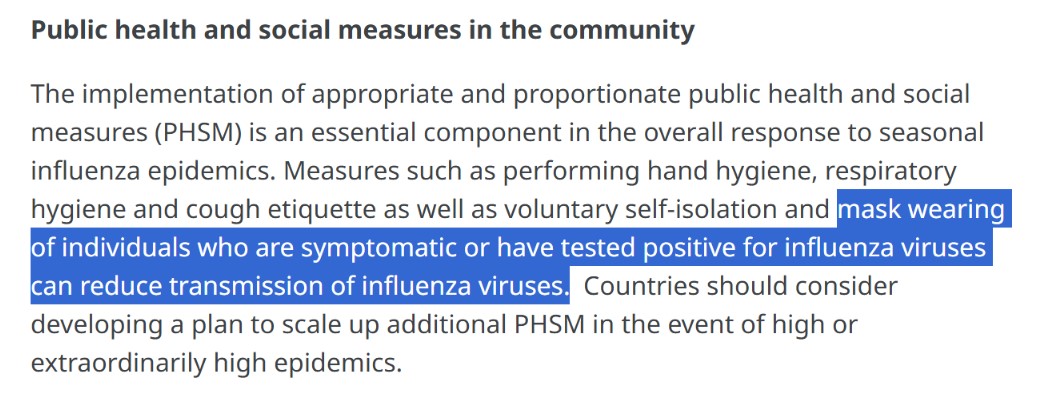
The World Health Organization says the wearing of masks by individuals who are symptomatic or have tested positive for influenza can reduce transmission of the virus, opens new tab.
The UK Health Security Agency also says face masks remain a useful tool, opens new tab in stopping the spread of respiratory viruses, protecting those who are already unwell from infecting others and from being infected with other viruses.
COCHRANE REVIEW
An evidence review, of physical interventions to interrupt or reduce the spread of respiratory viruses, published by the Cochrane Database of Systematic Reviews in 2023, has been, cited, in online posts as evidence that masks do not work.
More than a month after publication, its publisher Cochrane Library said in an online statement the study had been widely misinterpreted, and that the results were, in fact, “inconclusive”.
The review’s authors looked at a variety of interventions, including 18 randomised controlled trials (RCTs) examining the effectiveness of masks worn by healthcare workers or people in the community. They concluded that mask-wearing may make little to no difference in how many people catch flu-like or COVID-like illnesses.
The authors also said their “confidence in these results is generally low to moderate” for trials that didn’t confirm infection with laboratory testing. They pointed out as well that “relatively low numbers of people followed the guidance about wearing masks or about hand hygiene, which may have affected the results of the studies.”
Additional possible reasons the authors listed for the observed lack of effect included poor study designs and disparate circumstances – some studies were done during regular flu seasons, or even out of season, while others were conducted during the H1N1 flu and COVID pandemics.
John Conly of the University of Calgary in Canada, a coauthor of the Cochrane review, referred Reuters to the study’s abstract and conclusions. "It is well laid out there and nothing to add," he said in an email.
Trish Greenhalgh, a professor in primary health care from the University of Oxford, said in a phone interview there had not been one study that shows face masks don’t work in protecting against influenza, if you take into account whether participants in the randomised controlled trials wore the masks as instructed.
Another criticism of the Cochrane review is that most of the trials it included only looked at whether the mask protected the user from becoming infected, an article, co-authored by Greenhalgh and three other experts said, whereas it should have also considered whether the mask stopped an infected user from spreading their germs.
The NHS and the UK Health Security Agency did not respond to requests for comment.
VERDICT
Misleading. Face masks can help to reduce the transmission of respiratory viruses such as influenza, but their effectiveness depends on a wide range of factors.