
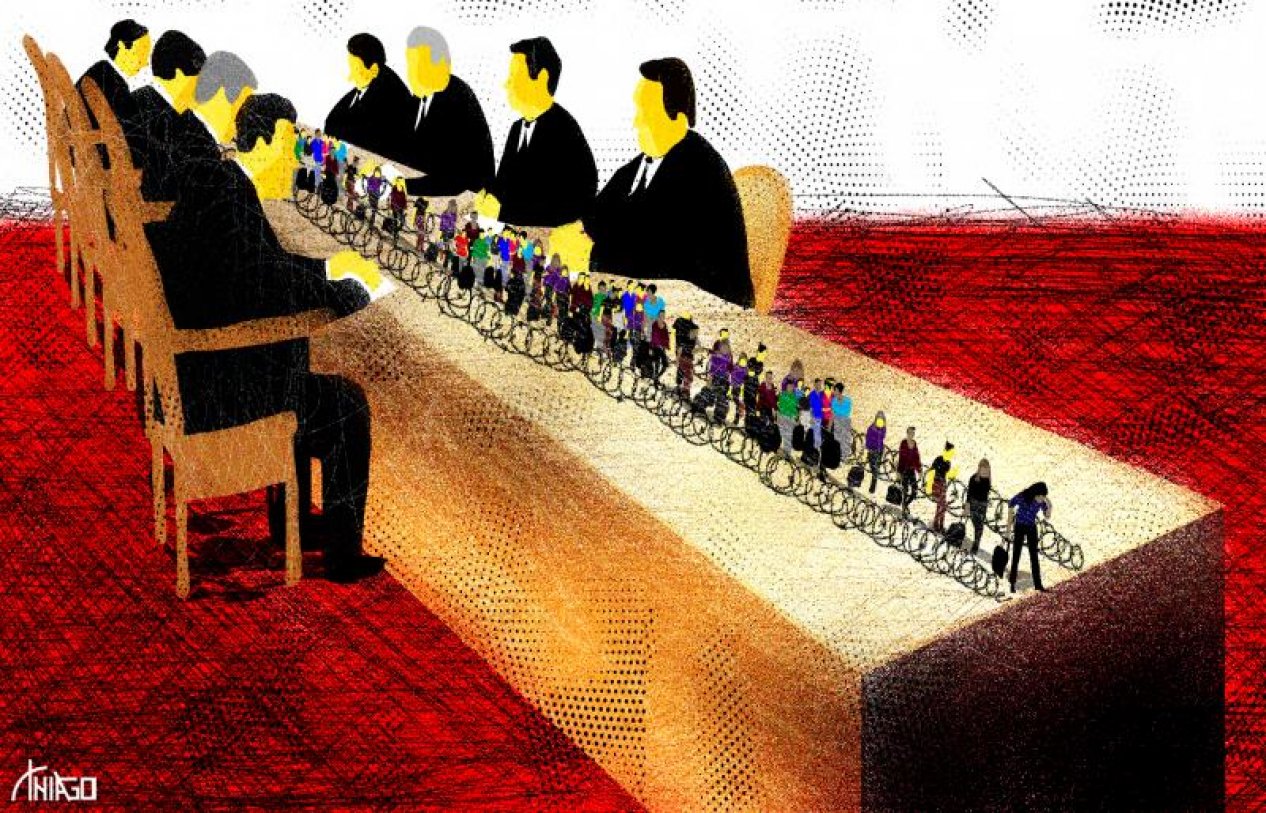
Across Europe, governments are increasingly outsourcing asylum reception and detention to private companies. In the name of crisis management, procurement rules are loosened, oversight weakens, and vast sums of public money flow to commercial actors. We reveal how a booming border market rewards failure, normalises abuse and turns administrative chaos into profit.
Sweden experienced an asylum bonanza in 2015. On 3 September, the first refugees reached the southern city of Malmö. The Scandinavian country welcomed these asylum seekers with open arms. A crowd gathered at Malmö train station to welcome the refugees. Per capita, Sweden was the most hospitable country in Europe.
At the same time, the influx of refugees proved to be the start of a veritable gold rush among entrepreneurs. During the autumn months of 2015, tens of thousands of people crossed the border every week, while there was only room for 2,500 people per week. But Sweden didn't have the capacity to accommodate all 70,000 underaged refugees.
Intermediaries charged municipalities high agency fees to place minor refugees with families. In the autumn of 2015 alone, 278 “family advice agencies” were registered. “It was, in a sense, the Wild West,” says Sanna Vestin of FARR, the Swedish National council of refugee groups.
It was within this context that Jan Emanuel came into the picture. Until 2010, he served in parliament for the Social Democrats. He also ran shelters for vulnerable young people.
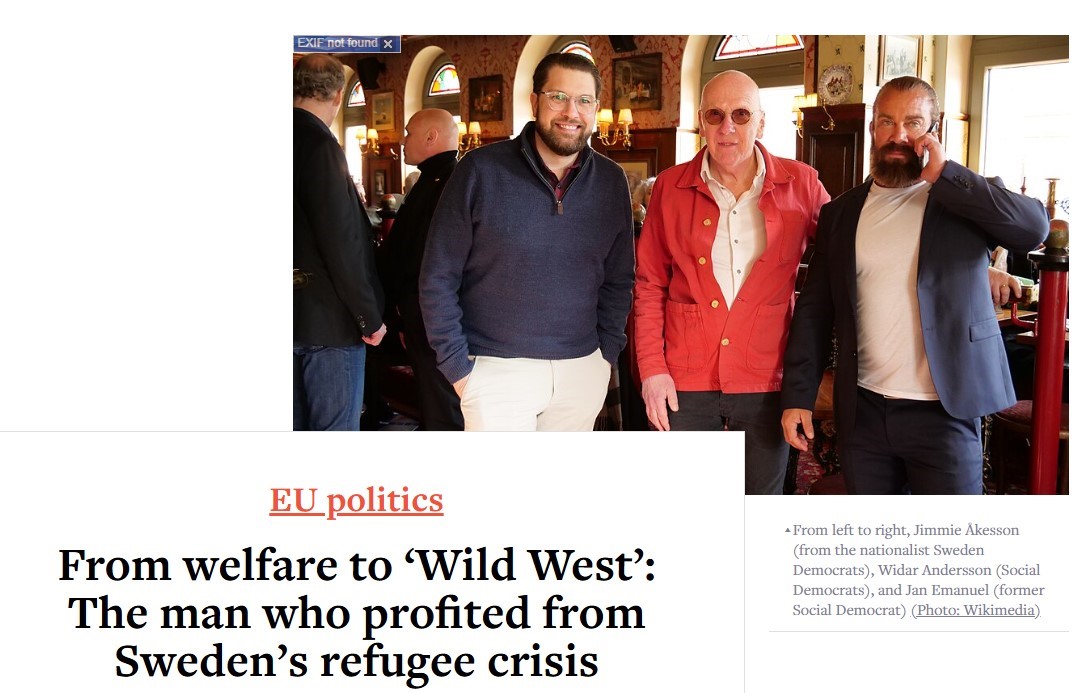
According to an investigation by the newspaper Expressen, his company, Hoppetgruppen, charged the municipality €180 per day per child in 2015. In some cases, Jan Emanuel was able to achieve a profit margin of over 80%.
Matilda Brink-Larsen, then head of department for the municipality of Gothenburg: “We placed young people in questionable locations. Sometimes we paid hundreds of euros a day, and no one checked whether the private companies were actually investing that money in the young people.”
At Emmanuel's care facility outside Uppsala drug offenses were rampant, as were serious vandalism and attempted murders. Seventeen complaints were filed. Shortly afterward, the house burned to the ground. A neighbor said, “There's absolutely no order... I'm afraid someone will die before the authorities intervene.” After speaking to the media, she received a call from Jan Emanuel: “I will use all legal means to ensure that you stop interfering with our business operations.”
In 2021, the Health and social care inspectorate banned Hoppetgruppen from working with refugee youth. The report concluded that they were operating unlicensed shelters, were understaffed, and had overworked and underqualified staff.
Netherlands: the “unburdener”
How is it possible that European governments in democratic countries – the United Kingdom, Sweden, Albania, Italy, and the Netherlands – are funneling taxpayer money to parties with criminal ties, sometimes without a tendering process? Is this accidental or deliberate?
Australian investigative journalist Antony Loewenstein described the migration market as “disaster capitalism” in his 2015 book of the same name. Loewenstein argues that companies like G4S, Transfield, and Serco “are delighted by the massive influx of refugees” because “detaining refugees is a hugely profitable business.” Disaster capitalism is a concept that builds on the theory of Shock Doctrine, developed by Canadian author Naomi Klein, in which political and economic elites exploit crises such as natural disasters, wars, or economic collapses to implement neoliberal reforms and privatisations while society is in disarray.
The Dutch asylum system has been in crisis mode for years, with overcrowded reception centers and images of refugees sleeping in tents. Meanwhile, a thriving market has emerged, generating enormous profits from providing emergency solutions. Hotel chains, holiday parks, and cruise ship rental companies are flourishing in this chaos. A real estate training institute even uses this to promote its courses: the asylum crisis has “created new market opportunities for commercial parties.”
Newspaper NRC Handelsblad recorded a striking example in Terneuzen, where the owner of a reception ship fueled protests against the arrival of an asylum seekers' center in an old office building, hoping to secure a lucrative contract with the COA for asylum reception on the water.
The Financieele Dagblad revealed how the Didam-based LCHD, a company led by “asylum millionaire” René Derksen, generated hundreds of millions in revenue by booking hotel rooms for refugees. By acting as an intermediary between the COA (Central agency for the reception of asylum seekers) and hotel chains, LCHD functioned as a “money machine that transferred all the risks to the other contracting parties, effectively receiving no payment,” according to the newspaper, citing contract law expert Lisa Jie Sam Foek.
Derksen sees this differently: “I incurred costs that hoteliers don't have,” he explained to the Financieel Dagblad in May . “I had a technical service and hired dozens of people to be available day and night. This way, I completely unburdened the COA from start to finish.” The Fiscal information and investigation service has since launched an investigation into Derksen's asylum deals. The COA has ended its collaboration with intermediaries and now has its own department dedicated to booking hotel rooms. The reception organisation would even prefer to stop renting hotel rooms altogether.
The chaos in asylum reception is no coincidence, but partly the result of the political decision to make structural cuts to asylum reception. Paradoxically, this leads to expensive reception, with the money primarily flowing to commercial parties offering “emergency solutions.” Thanks to this created crisis, they can demand the highest prices, often leaving no time for a proper tender. Thus, public money flows to property owners instead of to quality asylum reception.
Emergency shelter spaces are on average twice as expensive as regular shelters, according to the COA's annual figures. While the influx of asylum seekers has not increased since 2022, shelter costs have more than doubled in two years: from €1.6 billion in 2022 to €3.6 billion in 2024. At the end of 2024, the COA rented nearly ten thousand hotel beds for emergency refugee shelters.
The solution to the exorbitantly expensive emergency shelter seems simple, and is effectively on the table with the dispersal law: a larger investment in regular shelters throughout the Netherlands. “But the political will to implement real solutions is lacking. That's the main cause of the situation we're in now,” says Myrthe Wijnkoop of the Dutch Council for refugees. “It creates a constant state of panic, which is completely unnecessary.”
Yet the national government appears to be failing to learn from the current situation. While over €4 billion has been budgeted for the COA in 2025, the 2025 national budget stipulates that this amount must be reduced to a paltry €617 million by 2028, despite no indication that the number of migrants in reception facilities will have decreased. A recipe for even more chaos and expensive emergency solutions.
Meanwhile, politicians are using the system's failures as evidence of the urgency of the crisis. “The Netherlands is becoming one big asylum seekers' center,” far right politician Geert Wilders warned, in response to the large number of emergency shelters that the Central agency for the reception of asylum seekers has to open in a hurry due to a lack of regular reception centers.

United Kingdom: Fraud, violence and endless detention
In the United Kingdom, too, taxpayers' money flows to companies that have previously been prosecuted for fraud against the same government. Two companies – Serco and G4S – who were and are responsible for the Brookhouse immigration detention center near Gatwick Airport, have previously been prosecuted.
In 2013, it came to light that Serco and G4S had been defrauding the British government for years by billing non-existent prisoners for electronic ankle monitors. The Serious Fraud Office launched an investigation, after which Serco was ordered to repay £70 million and received an additional £23 million fine. Criminal proceedings against two Serco executives were dropped for procedural reasons. Nevertheless, Serco was awarded the £276 million contract for Brookhouse in 2020, and in 2023, both companies were again awarded the lucrative “tagging contract” for electronic ankle monitors.
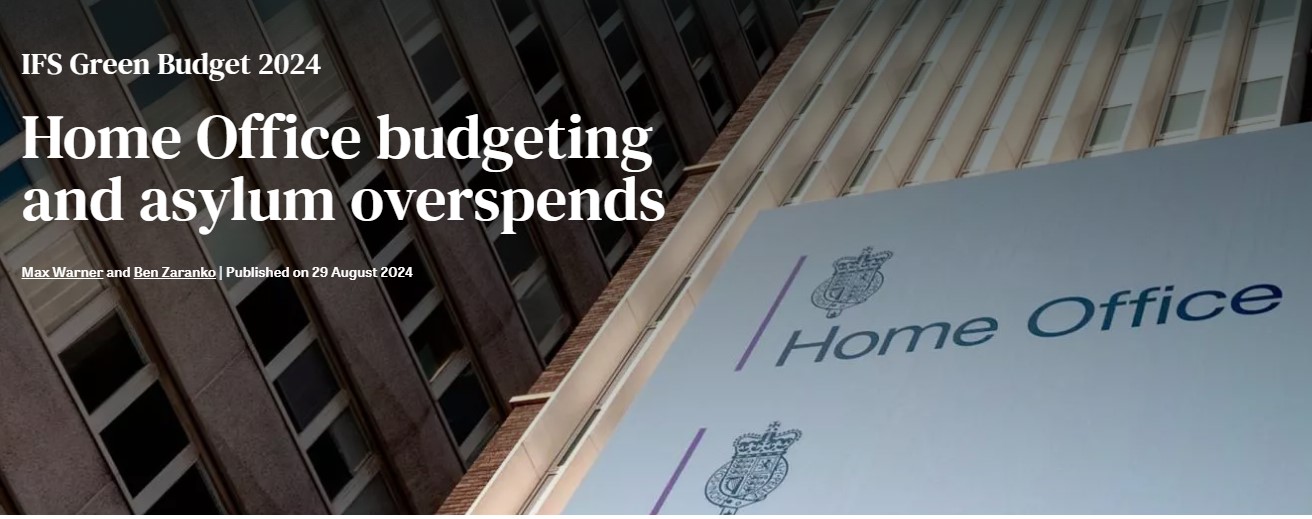
Spending on asylum and migration in the UK has skyrocketed. According to the Institute for Fiscal Studies, government spending on asylum seekers, border control, and passports in 2019-2020 was £230 million. By 2024-2025, it's expected to reach £4 billion – a 17-fold increase. In 2019, the government awarded £4 billion worth of asylum reception contracts over 10 years to just three companies: Serco, Mears, and Clearsprings Ready Homes.
Asylum millionaire and accusations of torture
Graham King, director of Clearsprings, made it onto the Times Rich List thanks to these lucrative contracts. "Asylum millionaire" King reportedly earned £74 million from asylum seekers. The Observer reported that Clearsprings' net profit increased 413-fold to £60 million.
Investigative collective Spit spoke with seven (former) Brookhouse inmates and three former employees. Kazeem Akimwale (49) ended up there last year after serving a nine-year prison sentence for fraud. He wants to return to Nigeria. "The Home Office contacted me. They said I can't leave until I repay the money I fraudulently obtained to the government. But I don't have a cent because I'm not allowed to work in the UK", Akimwale says.
A Somali man stayed at Brookhouse from September 2024 to January 2025. He arrived in the UK in 2002 as a 14-year-old after his family was murdered by the terrorist group El Shabab. He was given a "rule 35" health classification – a formal recognition for a victim of torture. "At Brookhouse, they told me they were going to send me back to the country where my family was murdered and where I was tortured. PTSD kept me awake at night," he says. A judge ruled it impossible to deport him because he didn't have a passport. "I was stuck at Brookhouse for four months for nothing."
A Polish man saw three Romanian asylum seekers jump onto an internal anti-suicide net in protest. Not because they wanted to stay in the UK – the men actually wanted to return home. “Serco staff then pepper-sprayed him”, he says. Serco denies that the guards have pepper spray. Six of the seven migrants we spoke with saw other migrants jump onto the net in desperation; some say it was a weekly occurrence.
A Ghanaian man says: “There were so many drugs in Brookhouse. Guards told me they work a lot of overtime because they can't make ends meet on their salaries. So some guards earn extra money by smuggling drugs into Brookhouse, especially the synthetic weed 'Spice.' That guard asked me if I wanted to earn some extra money too, but I don't do drugs.”
In 2024, Medical Justice published a report on Brookhouse with the ominous title If He Dies, He Dies. They interviewed 66 migrants. 84% had a history of torture or human trafficking, and 95% had a mental health condition, often Post-traumatic stress disorder (PTSD) or depression. The suicide risk was extremely high: three-quarters had suicidal thoughts or attempted suicide. Medical care frequently failed. Vulnerable people were not released despite warnings. Serco denied all allegations of wrongdoing, including those relating to the conduct of the guards.
The logic of the system
“In the migration sector, systemic failures aren't punished, but rather rewarded,” says criminologist Mary Bosworth of Oxford University. “The privatized border industry operates like a logistical operation, where efficiency is paramount.” Asylum seekers are treated like “parcels you can send around,” which furthers their dehumanisation.
Bosworth conducted years of research in the United Kingdom. In her book, “Supply Chain Justice,” she compares the movement of refugees to the parcel market. She calls this the “logistification” of the migration sector. The goal, she argues, is to depoliticise the refugee issue, making it harder to hold the government accountable. The effect is to normalize the inhumane treatment of migrants.
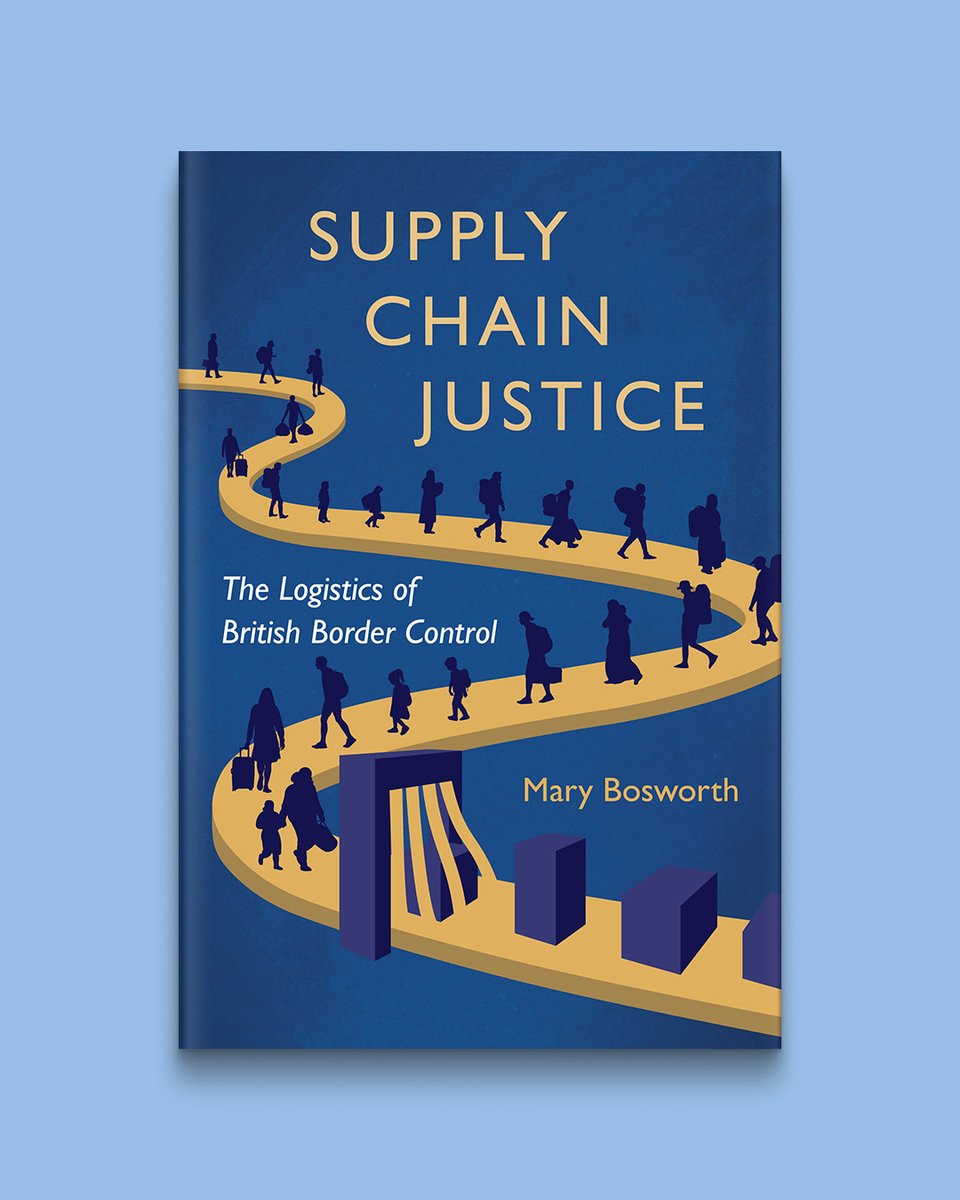
Bosworth quotes "Tony," an employee of Mitie, a company that handles immigration detention. The "higher purpose" of his work was "nothing less than an attempt to siphon public resources into private hands by exploiting hatred of migrants. The worst part of my job is knowing it's all about shareholder dividends."
The parliamentary inquiry committee investigating Brookhouse concluded that G4S subjected the detained migrants to degrading treatment. Guards were filmed by the BBC while choking, beating, or forcing migrants against the wall. Nevertheless, G4S earned a 20% profit margin – which was contractually prohibited. G4S created this profit margin by systematically cutting back on labor. Regarding these profit margins, Bosworth says: “The main way to make a profit is by not hiring enough staff.”
A structural pattern
Jan Emanuel would never have become who he is if the Swedish government, like the Netherlands, hadn't chosen to hire private companies to address public problems. Privatisation has been widespread, especially in countries with expensive welfare states.
Carrying out public tasks by private companies only works with a sound system of oversight.
But in Sweden in 2015, there was no tendering process – and later in many other countries, neither. After all, there's no time for that in times of crisis. In the Netherlands, the Central agency for the reception of asylum seekers also didn't always follow procurement regulations.
According to Elisabetta Manunza, procurement expert at Utrecht University, the issue bears similarities to the violations of the rules in face mask deals during the coronavirus pandemic. “Those laws and regulations are precisely there to prevent these kinds of situations”, she says.
What's happening in the Netherlands, Italy, Albania, Sweden, and the United Kingdom isn't a series of incidents, but a structural pattern. In the name of crisis and urgency, procurement rules are being stretched or ignored, oversight is being weakened, and public funds are being outsourced to private parties with dubious reputations or criminal records.
The consequences – dehumanisation, violence, and legal uncertainty – fall upon the migrants. The booming border market is lucrative because of a perverse incentive: administrative failures are not corrected, but rewarded with ever-increasing budgets. As long as political responsibility is outsourced to the market, the crisis will not remain a problem to be solved, but a profit model to be perpetuated.