
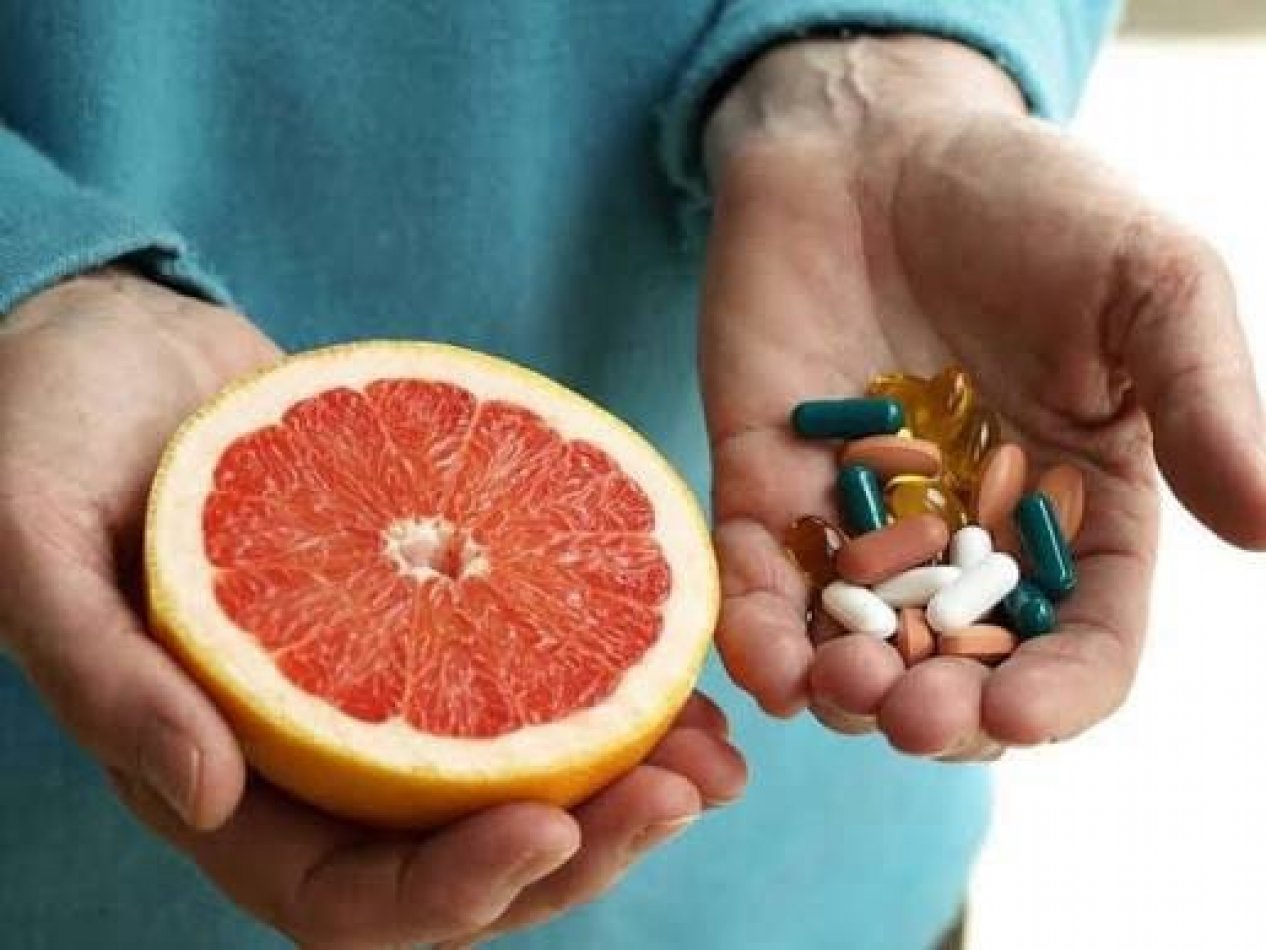
Grapefruit is often mentioned as a food that should not be combined with medications. This statement is not a myth; however, it requires clarification: the risk does not apply to all drugs, but only to certain groups.
Grapefruit contains compounds known as furanocoumarins. These substances inhibit the activity of the liver enzyme CYP3A4, which is involved in the metabolism of many medications. When the activity of this enzyme is reduced, drugs may be broken down more slowly, leading to increased concentrations in the bloodstream.
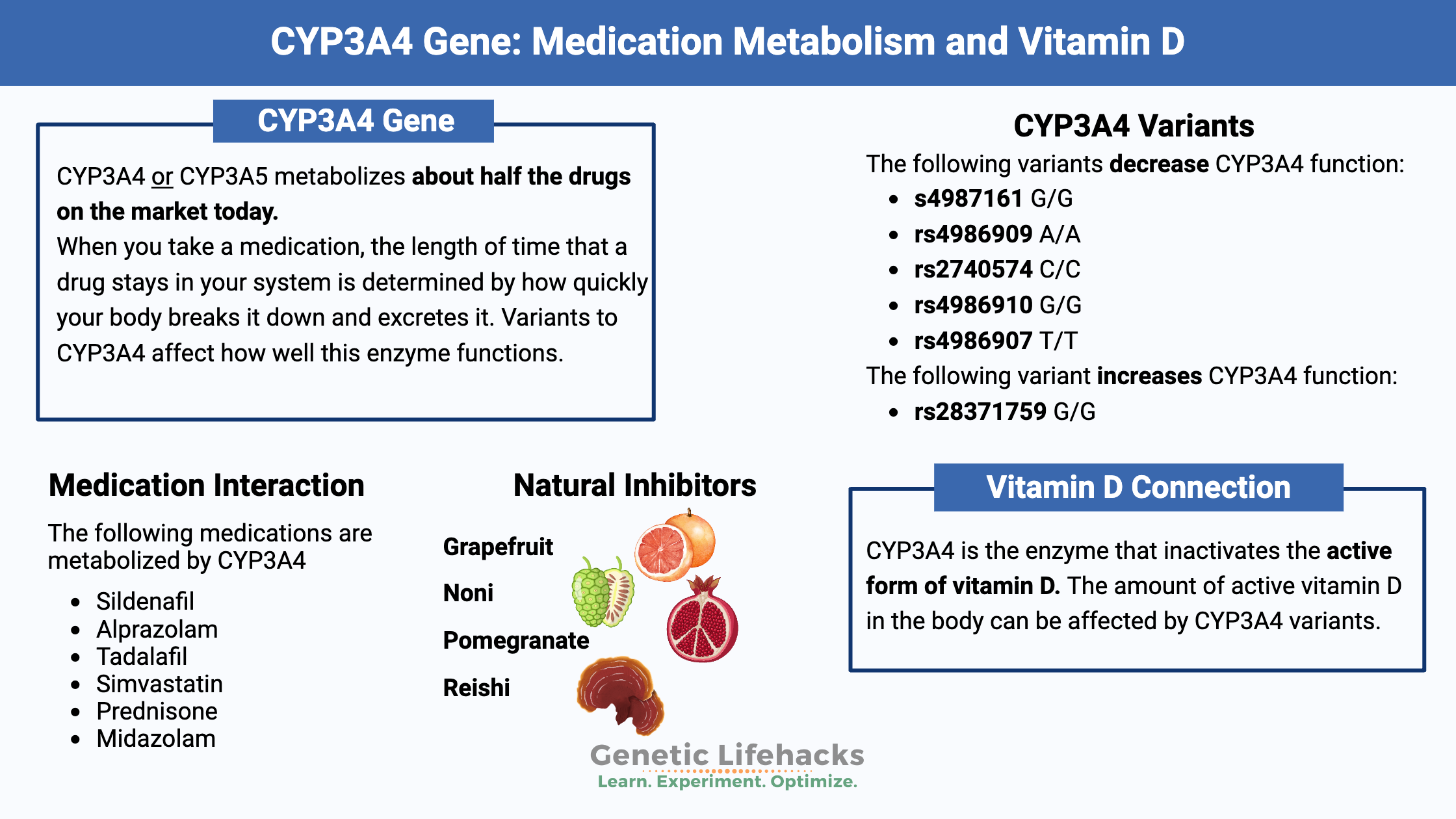
As a result of this interaction, the therapeutic effect of a medication may be enhanced, along with an increased risk of side effects. It is important to note that this effect can be significant and may persist for more than 24 hours after consuming grapefruit.
The most clinically significant interactions have been described for several groups of medications. These include certain statins (particularly simvastatin and atorvastatin), some antihypertensive drugs, antiarrhythmic agents, immunosuppressants, and a number of psychotropic medications. In such cases, combining these drugs with grapefruit can substantially alter the concentration of the active substance in the body.
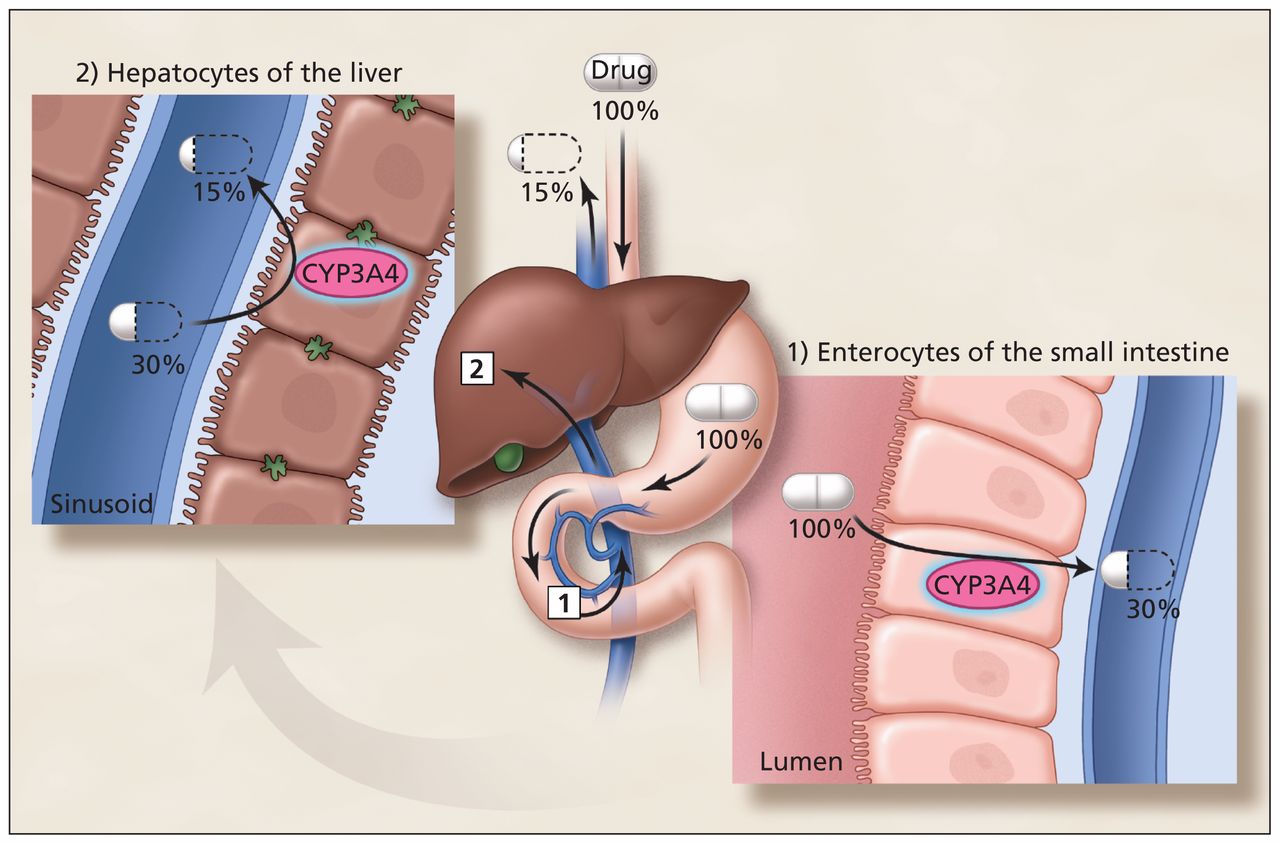
At the same time, it is important to understand that not all medications are metabolized via CYP3A4. This means that for a substantial number of drugs, grapefruit does not pose a clinically significant risk. The extent of the interaction depends on the specific medication, its dosage, and individual metabolic characteristics.
Thus, grapefruit should not be considered a universally prohibited food during medication use. However, during ongoing therapy with certain drugs, its consumption requires caution and an assessment of potential interactions.