Online ads and videos falsely tied public figures to a supposed gelatin-based weight loss method and related products such as Gelatide.
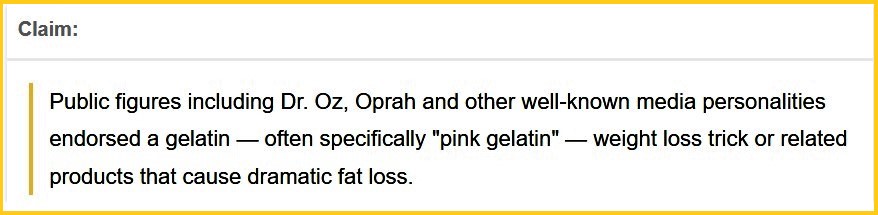
For months, readers emailed Snopes and searched our website asking whether well-known public figures were really endorsing a gelatin — often specifically "pink gelatin" — trick for weight loss. The question stemmed from online ads, social media videos and long sales pages that presented the supposed method as a breakthrough and, in some versions, steered users toward products sold under names such as Gelatide.
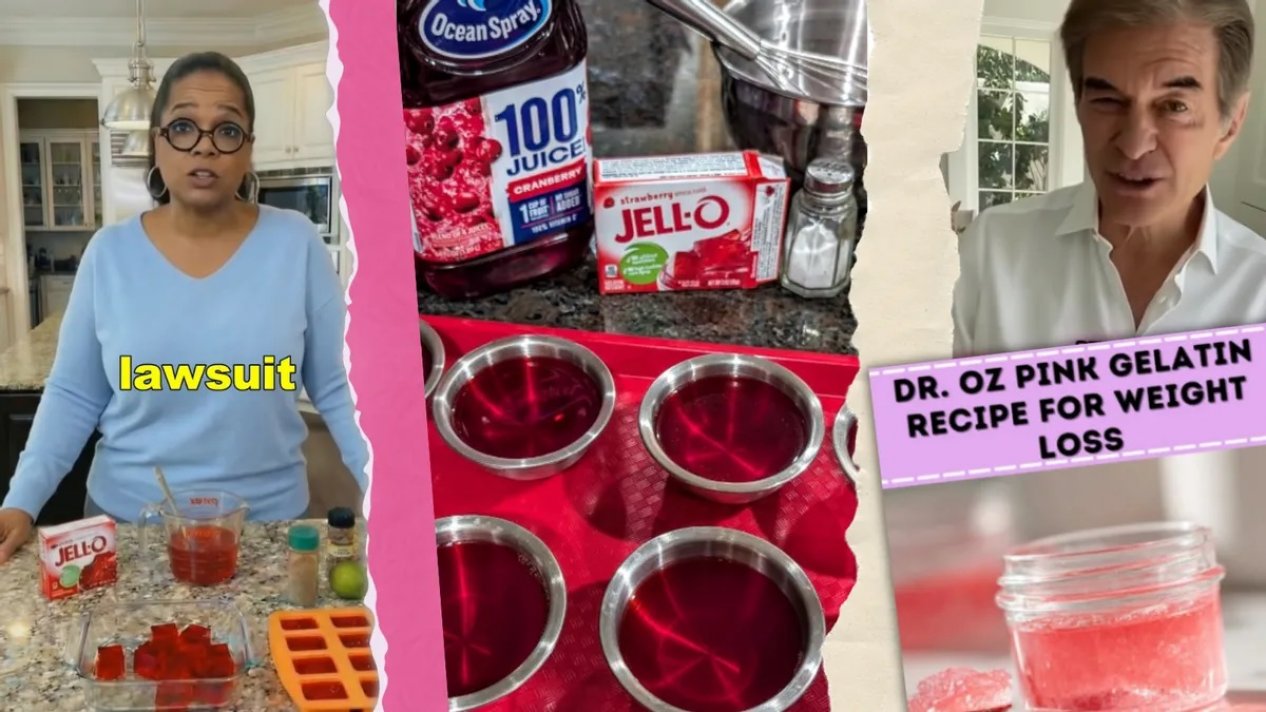
One reader, for example, shared a screenshot of a video (archived, archived) with a caption reading, "Dr. Oz Reveals the Gelatin Recipe to Lose 15 Pounds Before February Ends."
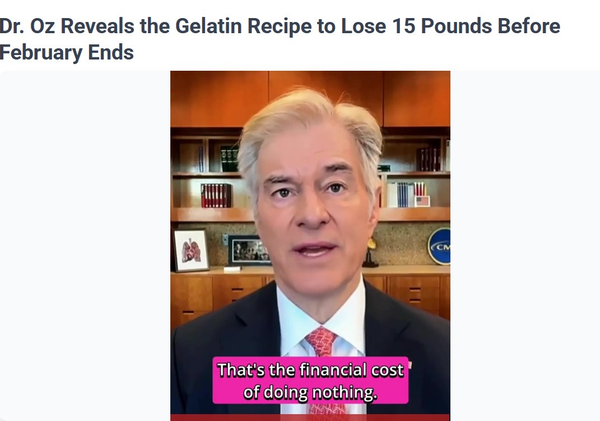
The rumor spread mainly through Facebook and Instagram posts and videos, as well as long-form landing pages that recycled similar weight loss "tricks." Dozens of readers sent us similar messages, and hundreds more searched our website looking for answers.
The answer is no. We found no evidence that the people featured in those ads created, endorsed or sold the "pink gelatin" method or related supplements. Rather, the materials fit a familiar scam pattern of using a recognizable name to build trust, then funnel users into a dramatic sales pitch for an unproven product. As such, we rated this claim as a scam.
Some of the people named in the ads are publicly associated with health, dieting or weight loss, which may help explain why the rumor seemed believable. But that does not mean they endorsed this specific supposed gelatin-based weight loss trick. Dr. Oz's official Facebook page, for example, has addressed concerns about fake ads featuring his name and likeness.
We were unable to identify one clear official website for the company behind Gelatide. Several different pages claimed to be the product's official site, and none included verifiable contact information. On the consumer review website Trustpilot, Gelatide-related pages had poor ratings of roughly 1.3 to 1.5 out of 5 stars, and many reviewers described them as scams or complained about billing and customer service problems.
Why and how this rumor spread
The rumor spread through a cluster of social media posts, ads and sales pages that recycled similar narratives while rotating the celebrity attached to it. Some posts framed the claim as a "Dr. Oz Pink Gelatin Recipe." Others attached the same idea to Oprah, Jillian Michaels, Dr. Jennifer Ashton, Melissa McCarthy or Kelly Clarkson. We also found videos and posts presenting the method as a viral "three-ingredient" hack, a "bariatric" trick or a secret routine for fast fat loss. In some cases, the pitch led not just to a recipe claim but to a branded supplement.
Some of the videos and audio clips promoting the claim also appeared to be generated using artificial intelligence or otherwise manipulated, adding another layer of false credibility to the scam. In several cases, the materials used a celebrity's likeness, voice or image to make the endorsement seem real even though we found no evidence it was authentic.
How the scam business model works
The campaigns falsely using celebrity names follow a repeatable pattern. A user first sees a dramatic ad or video making bold promises about easy fat loss through a simple "trick," "secret," "method" or "overlooked ingredient." The content then directs the user to a long video, a "link in bio" or a sales page designed to resemble an article or interview. Only later does the user discover that the real goal is to sell a supplement.
Some of the pages were designed to resemble legitimate news or television coverage. One page, for example, used branding and formatting that evoked CBS News and the program "60 Minutes" while promoting a supposed weight loss breakthrough "just like GLP-1," referring to a class of drugs that can spur weight loss.
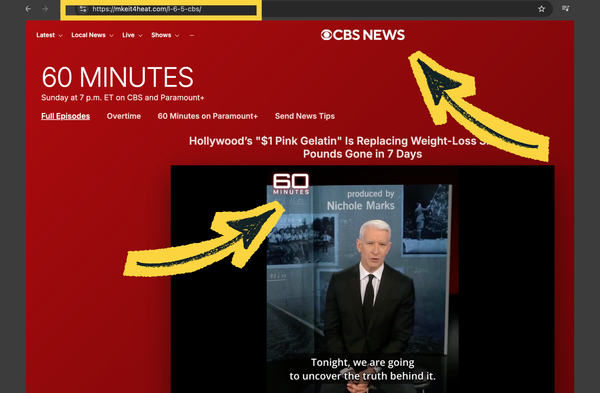
As in similar scams, the page also featured fabricated comment sections meant to simulate real user engagement and reassure potential buyers. For instance, several comments remained marked as having been posted only minutes earlier even when we revisited the page hours later, and we could not verify that the apparent commenter accounts corresponded to real Facebook users.
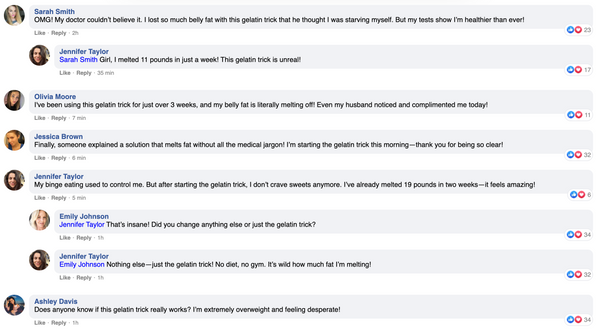
Those fake comments created the impression that ordinary people have already tried the method and seen dramatic results, even though there was no way to verify those testimonials were genuine.
A note about the weight loss claim
The broader medical claim in the ads is also dubious. The Food and Drug Administration warns that many products marketed for weight loss represent a form of medication health fraud and has issued repeated public notifications about weight loss products containing undeclared drug ingredients. It also cautions that products claiming to help with weight loss are frequently sold online, including on social media, with hidden ingredients or misleading marketing.
The National Institute of Diabetes and Digestive and Kidney Diseases advises consumers to choose weight loss programs carefully and to look for approaches grounded in safety and evidence rather than exaggerated promises.
While gelatin can be used in low-calorie foods or snacks, we did not find credible evidence that the so-called "pink gelatin trick" was a medically established breakthrough for significant fat loss, nor that the public figures named in the ads were actually involved with the products being sold.
How to spot this kind of scam
These posts often share the same warning signs. They make miracle weight loss claims, use a familiar face to gain trust, vaguely refer to secret or suppressed science and redirect users to a long video that delays naming the actual product while using language designed to push a purchase.
Consumers should be especially cautious when a product promises dramatic results while offering little clear information about who is selling it, what evidence supports it or exactly what it contains. The FDA warns many weight loss products promoted online may be fraudulent or contain undeclared ingredients.
A legitimate breakthrough in weight management would normally be reflected in peer-reviewed research and clinical guidance. It would not be hidden behind a mystery sales funnel built around a viral "trick."
Not just Dr. Oz
Dr. Oz was not the only public figure whose name appeared in this kind of advertising. We found public posts and videos tying the same or similar gelatin narrative to Oprah, Kelly Clarkson, Jillian Michaels, Melissa McCarthy, Dr. Jennifer Ashton, Adele, Reba McEntire and Serena Williams, among others.
That suggests the "pink gelatin" ads were part of a broader scam ecosystem. While the names and faces may change, the structure stays largely the same, featuring a familiar celebrity, a dramatic health claim and an unproven product presented as a breakthrough.
Bottom line
All in all, no credible evidence exists that Dr. Oz, Oprah, Kelly Clarkson, Jillian Michaels, Melissa McCarthy, Dr. Jennifer Ashton or any other public figure endorsed a "pink gelatin" weight loss method or products such as Gelatide. What these ads do represent is a textbook scam that exploits trusted names, manipulates emotions and makes health promises the science does not support.
We have debunked similar scams before, including false claims that Bill Gates backed Alzheimer's remedies and that Oprah promoted a "pink salt recipe" for weight loss. As in those cases, the names and products may change, but the tactic stays the same: using a familiar public figure to sell an unproven health claim.
If you encounter similar claims, treat them with skepticism regardless of which celebrity's face appears alongside them. And if you come across similar ads, send them our way.